
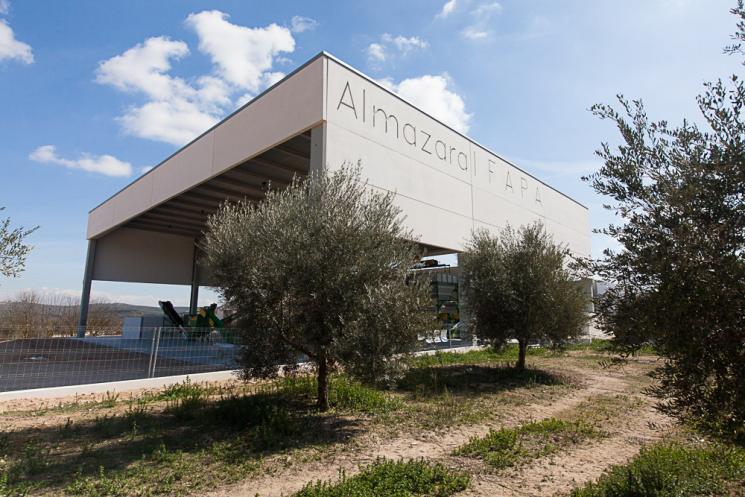
A team of scientists at the Venta del Llano centre (Mengíbar, Jaén) of the Andalusian Institute of Agricultural, Fisheries, Food and Organic Production Research and Training (IFAPA) has demonstrated in a study that the use of enzymatic preparations solves the problem of "difficult pastes" in early-harvest olives, increases industrial yield and improves the total phenolic content of extra virgin olive oil.
This work, which provides the most robust and comprehensive scientific evidence obtained in the sector to date, has shown that enzymatic preparations act safely as genuine technological processing aids, mechanically facilitating the release of the oil without structurally altering its identity or leaving any negative biochemical traces — a finding that could mark a regulatory turning point.
The data obtained by IFAPA's research centre in Jaén thus represent a significant advance with the potential to optimise the viability and resilience of the international olive oil sector.
Specifically, these data are shaping up to become the technical foundation for supporting and formally requesting a review of European Union regulations with a view to the reauthorisation of enzymatic processing aids in olive mills. Such approval would provide producers with a key tool for maximising the profitability of their premium early-harvest oils without sacrificing their purity and natural identity.
A technological advance against the limitations of current regulations
European Union legislation currently prohibits the use of any processing aid with biochemical activity in the production of virgin olive oils, permitting only micronised talc, which is considered a purely physical agent. This prohibition dates back to 2001, after a number of isolated studies suggested that enzymes could alter certain regulated indices under particular conditions of ripeness or high temperature.
The new approach taken by researchers at IFAPA — a public research institute attached to the Regional Ministry of Agriculture, Fisheries, Water and Rural Development — changes the picture governing the use of enzymes. The trial was designed using an enzymatic preparation applied directly in the malaxer to a paste of early-harvest Arbequina olives with a moisture content of more than 60%.
The major technological innovation lay in operating at an exceptionally low malaxation temperature of just 19 °C. This is an ideal temperature for preserving the fruit's freshest volatile compounds, but a critically challenging one for conventional separation processes and for the use of enzymes.
Greater commercial yield and a healthy boost
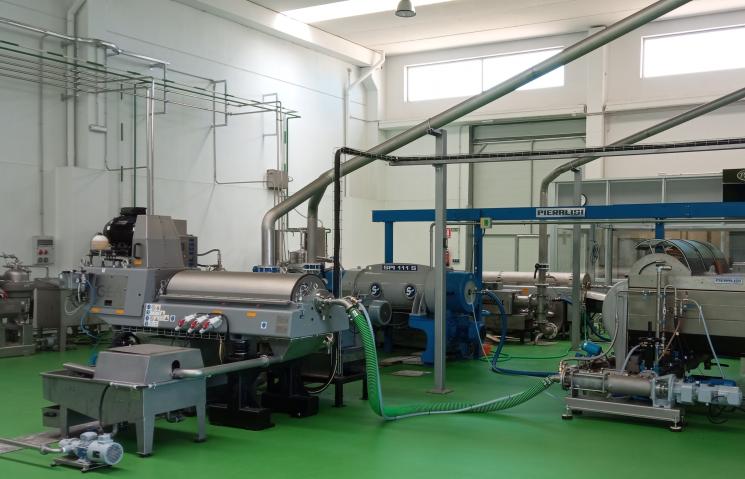
The results obtained at industrial mill scale demonstrate the considerable benefit of this technology. On the one hand, extraction efficiency improved: the use of enzymes directly raised industrial yield from 8.99% in the control sample to 9.79% in the treated paste. This represents a significant improvement in oil recovery capacity under conditions of low-temperature processing and high fruit moisture.
On the other hand, an extraordinary bioactive enrichment was detected. Far from diminishing the oil's properties, the treatment enabled the selective release of phenols and their transfer into the oil phase. Total phenolic content rose by 31%. The researchers also highlight the increase in two of the natural antioxidant and anti-inflammatory compounds most valued by health-conscious consumers: oleacein rose by 68% and oleocanthal by 35%.
At the same time, thanks to the higher content of natural antioxidants and pigments (chlorophylls and carotenoids), the oils produced with enzyme treatment showed substantially greater oxidative stability, guaranteeing a longer commercial shelf life.
The sensory profile was also preserved: the oils retained the fruitiness characteristic of the variety and displayed more elegant intensities of bitterness and pungency, a natural consequence of their greater phenolic richness.
The IFAPA scientific study
IFAPA researchers Gabriel Beltrán, Abrahan M. Gila, Araceli Sánchez, María de la Paz Aguilera and Antonio Jiménez have demonstrated, under real industrial milling conditions and at an extraordinarily cold temperature (19 °C), that the use of enzymatic preparations solves the problem of "difficult pastes" in early-harvest olives.
According to the study, enzymatic preparations increase the industrial yield of the Arbequina variety and drive total phenolic content up by 31%, particularly the health-related compounds oleocanthal and oleacein.
Beyond the productive and nutritional advantages identified, the true sector-wide significance of the work lies in its rigorous regulatory solidity. Unlike past research that analysed only a handful of chemical markers, the IFAPA team has carried out a pioneering and exhaustive validation of the full battery of purity and authenticity parameters regulated by the European Union and the International Olive Council (IOC).
The study details that the oils extracted with the aid of enzymes remained within the legal limits required for the extra virgin category. No biochemical alteration whatsoever was detected in the fatty acid profile, total sterols, erythrodiol, uvaol or aliphatic alcohols. Likewise, critical biomarkers that would flag heat treatment or fraud — such as stigmastadienes, 2-glyceryl monopalmitate, diacylglycerols and pyropheophytin A — remained unaltered and identical to those of the traditional process.
The work seeks to address the technical challenges facing olive mills amid a global trend towards the production of early-harvest extra virgin olive oil (EVOO), which has transformed the sector in pursuit of maximum sensory and nutritional excellence. Specifically, it addresses the challenge posed by green, unripe olives, which have high moisture levels and a large quantity of pectins in their cell walls, frequently resulting in the formation of the dreaded "difficult pastes". These pastes generate highly stable emulsions that trap the oil and make its mechanical extraction extremely difficult, causing losses and direct economic damage to the producer.
 Sentido Común Internet
 Agrifood Comunicación

 Solo disponible accediendo desde Safari
