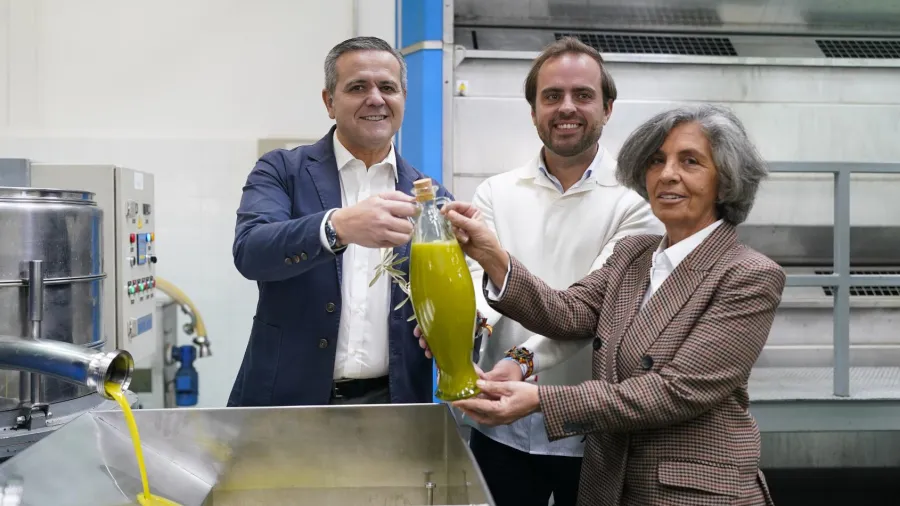
The Community of Madrid has taken part in the launch of the olive harvest for the Protected Designation of Origin (PDO) Aceite de Madrid, at an event held at the Cooperativa Aceitera de Arganda in Arganda del Rey. The Regional Minister for the Environment, Agriculture and Interior, Jorge Rodrigo, attended the harvest and highlighted the role of farmers in preserving and promoting the region's agri-food products.
During the visit, Rodrigo stressed the importance of ensuring generational renewal by providing advice to young people and bringing them into the sector, as well as the value of production linked to quality and territorial identity.
New traceability system to protect olives
Coinciding with the start of the harvest, the regional government will introduce the Olive Accompanying and Traceability Logbook (CATA) in the coming days. This tool will make it possible to track the fruit from harvest to destination, strengthening food safety controls and transparency in the production chain.
The system also aims to prevent fraud and to protect farmers against the rise in thefts from farms. To this end, olives intended for production will have to be accompanied by the corresponding traceability certificate, proving their origin.
Cooperativa Aceitera de Arganda, a benchmark for olive growing in Madrid
Founded in 1930, the Cooperativa Aceitera de Arganda is one of the oldest agricultural organisations in the region. It brings together more than 1,000 hectares of olive groves and around 100,000 trees, with varieties such as Picual, Cornicabra and Manzanilla.
Some of its oils have won awards at international competitions held in Berlin and Italy, reflecting the international profile of the oil produced in the region.
 Sentido Común Internet
 Agrifood Comunicación

 Solo disponible accediendo desde Safari
