
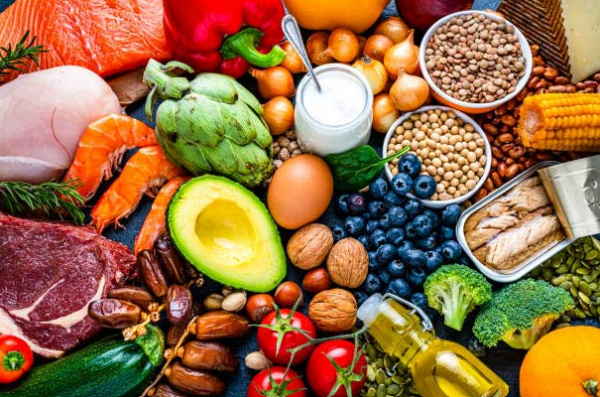
Diet is perhaps one of the habits we can most easily change to look after our brain health. However, it is not only a matter of choosing certain foods over others: our diet as a whole, the times at which we eat and the way we eat also play a part.
This was highlighted by the Spanish Society of Neurology (SEN), which presented a review of the existing scientific evidence on diet and brain health at its Annual Meeting.
The scientific evidence shows that diet plays an important role in preventing neurological diseases, both through its direct effects and through its influence on various risk factors.
In the case of dementia, a Lancet Commission estimated that acting on 14 modifiable risk factors, including obesity, diabetes, high blood pressure, excessive alcohol consumption and cholesterol, could prevent or delay up to 45% of cases.
For stroke, the international INTERSTROKE study identified ten modifiable risk factors that together account for around 90% of the risk of this cerebrovascular disease.
These include high blood pressure, cholesterol, diabetes, obesity and, in particular, an unhealthy diet, which alone can be held responsible for 23% of stroke cases.
What to eat for a healthy brain: the overall pattern is what matters
Of the various dietary options studied, the Mediterranean diet has the strongest scientific support in the field of brain health.
Meta-analyses associate greater adherence to the Mediterranean diet with at least a 12% lower risk of stroke and up to a 30% lower risk of Alzheimer's disease.
In Spain, the PREDIMED study also provided evidence of the vascular benefits of the Mediterranean diet.
This study, involving more than 7,000 people at high vascular risk, showed that following a Mediterranean diet supplemented with extra virgin olive oil (EVOO) or nuts reduced the risk of vascular events such as heart attack or stroke by approximately 30%, and benefited cognitive function compared with a low-fat control diet.
"The available scientific evidence supports the view that what matters is looking after our diet as a whole, rather than relying on the benefits of any one food. Most studies that have linked the consumption of certain foods with a lower risk of developing neurological diseases are observational: they make it possible to identify associations, but cannot on their own prove that those foods reduce the risk," explained Dr Javier Camiña, Board Member of the Spanish Society of Neurology.
"In any case, and bearing in mind that there are no miracle foods or superfoods, the most recent research seems to suggest that there may also be specific benefits in eating fruit and vegetables, fish, extra virgin olive oil, pulses and nuts, as well as in drinking coffee and tea."
Ultra-processed foods and alcohol: habits to avoid for a healthy brain
Although it cannot be stated categorically that eating a particular food reduces the risk of developing a neurological disease on its own, there is evidence that certain foods increase that risk.
This is the case with ultra-processed foods. The most recent meta-analysis, covering 28 studies, found that high consumption of ultra-processed foods was associated with a 56% higher risk of Parkinson's disease, a 17% higher risk of cognitive impairment and a 15% higher risk of multiple sclerosis.
A recent Canadian study of almost 9,000 people also concluded that those who ate the most ultra-processed foods were 40% more likely to have vascular brain lesions.
Alcohol consumption has been linked to an increased risk of dementia and stroke, and heavy, prolonged drinking causes damage to the brain and peripheral nerves, affecting memory, cognitive ability and balance, among other things.
Processed and red meat have been linked to an increased risk of stroke, and excessive salt intake to cognitive impairment and a higher risk of stroke, mainly through its effect on blood pressure.
In a trial carried out in China with more than 20,000 people, replacing regular salt with a lower-sodium, higher-potassium alternative reduced the stroke rate by 14%.
What we know and what we do: eating habits in Spain
Despite the evidence on the importance of diet, the results of a SEN study on brain-healthy habits among the Spanish population show that there is still a gap between what people understand as healthy and the habits they actually follow.
According to this survey of more than 1,000 people, 96% consider the Mediterranean diet to be good for the brain and 79% believe their own diet is at least moderately healthy.
However, 45% of respondents eat fewer than two pieces of fruit a day, 35% eat hardly any vegetables and 50% eat fish less than three times a week. In addition, 24% eat pastries or sweets every day.
Adults aged 18 to 34 are the least likely to follow dietary recommendations: only 41% meet the recommendation on fruit, compared with 67% of those over 60. For vegetables, the figures are 58% and 76% respectively, and for fish, 40% and 65%.
"In addition, 11% of respondents say they drink alcohol every day or almost every day, while 24% believe that drinking occasionally is good for the brain, an idea that current scientific evidence does not support," commented Dr Javier Camiña.
Mealtimes also influence brain health
Meal times, company and distractions while eating are other aspects that are beginning to attract scientific attention in the study of the relationship between diet and the brain.
For example, a recent study in France of more than 100,000 people estimated that eating dinner after 9 pm is associated with a 28% higher risk of cerebrovascular disease compared with eating before 8 pm.
"The way we eat also matters for the brain. Earlier this year we presented a report, prepared together with Rey Juan Carlos University and CIBEROBN with the collaboration of IKEA, analysing the relationship between the eating experience, company and screen use. Among its findings, we saw that cooking with others was associated with a greater feeling of joy, which is tremendously beneficial for brain health. By contrast, using a mobile phone reduced the joy associated with cooking by 32%, and eating with the phone generated a more negative emotional response than eating alone. Even so, according to the same study, in Spain the mobile phone is present at 47% of weekday meals and 53% of weekend meals," said Dr Jesús Porta-Etessam, President of the Spanish Society of Neurology.
"Eating while distracted can also influence our eating habits. A recent meta-analysis found that paying attention to other stimuli during a meal is associated with greater intake; in other words, distractions can alter the way we regulate how much we eat," Porta-Etessam added.
Cooking has also been shown to benefit cognitive health. A Japanese study of more than 10,000 people aged over 65 concluded that those who cooked meals from scratch at least once a week had a 23% lower risk of dementia in men and a 27% lower risk in women.
SEN recommendations for a healthy brain:
· Follow a complete Mediterranean pattern, based on fruit, vegetables, pulses, fish and extra virgin olive oil.
· Cut down on ultra-processed foods and cook at home with fresh produce whenever possible.
· Avoid alcohol.
· Have dinner at least a couple of hours before going to bed, at regular times.
· Eat and cook with others whenever possible.
· Keep mobile phones away from the table and the kitchen.
· Learn to cook and try new recipes.
 Sentido Común Internet
 Agrifood Comunicación

 Solo disponible accediendo desde Safari
