
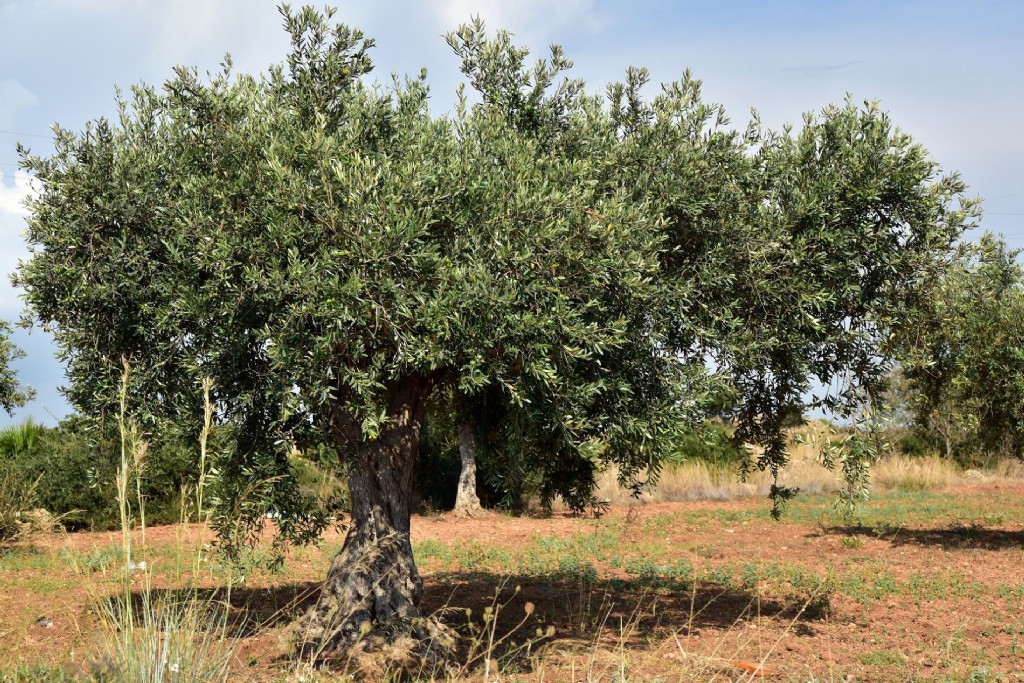
Second Vice President José Manuel Caballero has proposed, in the objections submitted to the river basin authorities, the conversion of up to 9,000 hectares of olive groves in Campo de Montiel into irrigated farmland. He confirmed this on Tuesday morning in Pozo de la Serna, accompanied by the Provincial Delegate for Economy, Business and Employment, Miguel Ángel Díaz Brazales, and the Provincial Delegate for Public Works, Manuel Martínez López-Alcorocho.
“As you know, there was a consultation period from November last year until May this year during which institutions, municipalities, provincial councils, regional governments, political parties, farmers’ organisations, trade unions, business organisations and other stakeholders were able to submit objections to the proposed new river basin management plans,” Caballero recalled. In this regard, he stressed that the Government of Castilla-La Mancha “has done so, submitting 100 objections covering all the river basin districts that have an impact on Castilla-La Mancha.”
Caballero explained that “we have submitted objections in particular to the Guadiana River Basin, which is extremely important for the province of Ciudad Real, and also to the Guadalquivir River Basin, as it affects part of the Campo de Montiel area and municipalities in the Puertollano region, as well as towns in the south-west of the province of Albacete.” From Campo de Montiel, he outlined some of the objections submitted to the Guadalquivir River Basin Authority that specifically affect this area.
He highlighted the Regional Government’s request to promote the conversion of between 6,000 and 9,000 hectares of olive groves in Campo de Montiel into irrigated farmland, “a project that has been allocated €15 million in the regional budget.” In this regard, the Second Vice President called for the process to be launched as soon as possible so that the first 1,000 hectares can be converted to irrigation at the earliest opportunity.
Among other issues, José Manuel Caballero also called for the future European directive on urban wastewater treatment to take into account the realities faced by small municipalities and to be accompanied by national or European funding. “The aim is to enable municipalities with fewer than 2,000 inhabitants to meet the new wastewater treatment requirements,” he explained. He added that the objections also seek to support municipalities in fulfilling their responsibilities regarding water supply and in addressing the challenges posed by infrastructure projects that involve very high costs.
Finally, José Manuel Caballero said he hopes “to learn about the objections submitted by other public administrations, whether the Provincial Council has submitted any, and whether the opposition political parties have done so. It is important that everyone has their say, but it is equally important that everyone makes their position clear in writing, showing where they stand on water policy and whether what they say publicly is reflected in the proposals they formally submit.” He therefore urged all parties “to share this work transparently and make public the proposals they have put forward, if they have done so.”
 Sentido Común Internet
 Agrifood Comunicación

 Solo disponible accediendo desde Safari
