
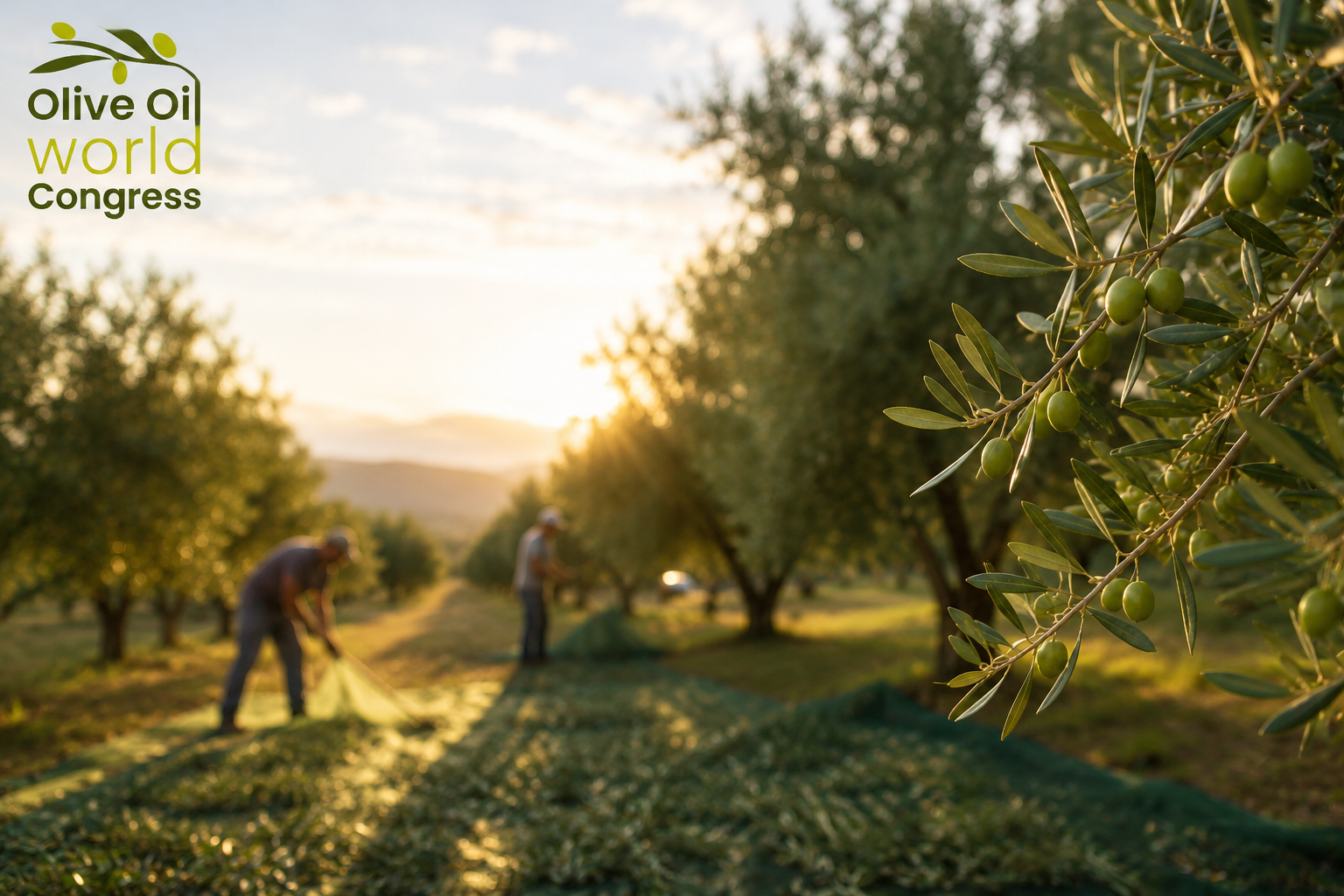
For centuries, the value of olive groves has been measured primarily by their ability to produce olive oil. However, in a context marked by climate change, new regulatory requirements and the growing demand for more sustainable production models, an increasingly relevant question is emerging for farmers, companies and public administrations: can olive groves generate value beyond olive oil production?
This question will be at the heart of one of the sessions of the Olive Oil World Congress (OOWC), the leading international forum dedicated to the olive oil sector, which will bring together researchers, producers, companies and institutional representatives from around the world in Lisbon on 2 and 3 July.
Under the title “Bioeconomy and Sustainability of the Olive Oil Sector and the Industry”, the session will examine some of the key trends shaping the sustainability debate within the sector, from voluntary carbon markets to biodiversity, circular economy models and the recognition of ecosystem services associated with olive groves.
The session will open with a presentation by Juan Antonio Polo, from the International Olive Council (IOC), who will discuss the role of voluntary carbon credit markets as a tool for valuing the environmental services provided by olive groves in the fight against climate change.
Next, Karolina Brkić Bubola, from the Institute of Agriculture and Tourism of Croatia, will analyse how circular economy models and digital technologies are helping to drive new sustainability strategies in the olive sector through the European CIRCOLIVE project.
Biodiversity will be another of the major topics addressed during the session. In this context, José Alberto Pereira, from the Polytechnic Institute of Bragança, will highlight the role of traditional olive groves as a source of biodiversity and ecosystem services, underlining their contribution to environmental balance and landscape conservation.
For his part, Gonçalo Moreira, from Olivum, will focus on the importance of recognising sustainability as a strategic element for both the present and future of the olive oil value chain.
Beyond Production
The sustainability session of the Olive Oil World Congress will demonstrate how the debate surrounding the future of olive groves is no longer limited exclusively to productivity or oil quality. Issues such as the conservation of natural resources, adaptation to climate change, the valuation of environmental services and the implementation of circular economy models are playing an increasingly important role in the sector’s development strategies.
In this context, the Congress will provide an international platform for reflection on the role that olive groves can play in building more sustainable, resilient and competitive agri-food systems.
All individuals, companies and public or private institutions from the olive oil sector interested in participating in the Congress can register through the following link: https://www.oliveoilworldcongress.com/inscription
The Congress already benefits from the institutional support of the International Olive Council (IOC), CIHEAM Zaragoza and the Mediterranean Diet Foundation, together with public bodies such as the Portuguese Ministry of Agriculture and Maritime Affairs, the Regional Government of Castilla-La Mancha (“Campo y Alma”), the Government of Catalonia and IMIDRA.
Within the private sector, this second edition is currently supported, in addition to Olivum, by organisations including AgroBank, the Spanish Olive Oil Interprofessional Organisation, GEA Group, Novonesis, APOAC (Associação para a Promoção do Olival e Azeite de Aire e Candeeiros) through its commercial brand “Olivedos do Carso”, Adsaica (Associação de Desenvolvimento das Serras de Aire e Candeeiros), Feria de Zaragoza (ENOMAQ), Kubota, Dazeite and Siliker, as well as OlivoGestão as sponsor of the Scientific Poster Competition.
The OOWC invites all stakeholders to become part of this collaborative international initiative and encourages them to explore the available sponsorship and cooperation opportunities. Further information can be obtained through the OOWC Technical Secretariat by calling +34 91 721 79 29 or emailing info@oliveoilwc.com.
 Sentido Común Internet
 Agrifood Comunicación

 Solo disponible accediendo desde Safari
