
The Olive Oil World Congress (OOWC) kicked off its first technical day with innovation taking center stage. Artificial intelligence, drones, data management platforms, value chain digitalization, and industrial automation dominated the opening sessions of a program that confirms technology has become the olive grove and olive mill sector's main driver of competitiveness in the 21st century.
Miguel Córdoba, from xFarm Technologies, opened the technical sessions with a presentation on the real impact that new technologies are already having on olive cultivation, a sector currently experiencing a pivotal moment of technological convergence. In his presentation, "Smart Farming in the Olive Oil Sector: AI, Drones and Data," Córdoba demonstrated how digital management platforms now enable growers to monitor orchards in real time, optimize irrigation and fertilization, detect pests—such as the olive fruit fly—and plan field operations with a level of precision previously unattainable for most olive growers. He emphasized that these technologies are no longer exclusive to large-scale operations but are increasingly accessible to medium-sized producers, urging the industry to view them as a strategic investment for reducing costs and improving quality.
The Digital Agrifood Sector Continues to Grow
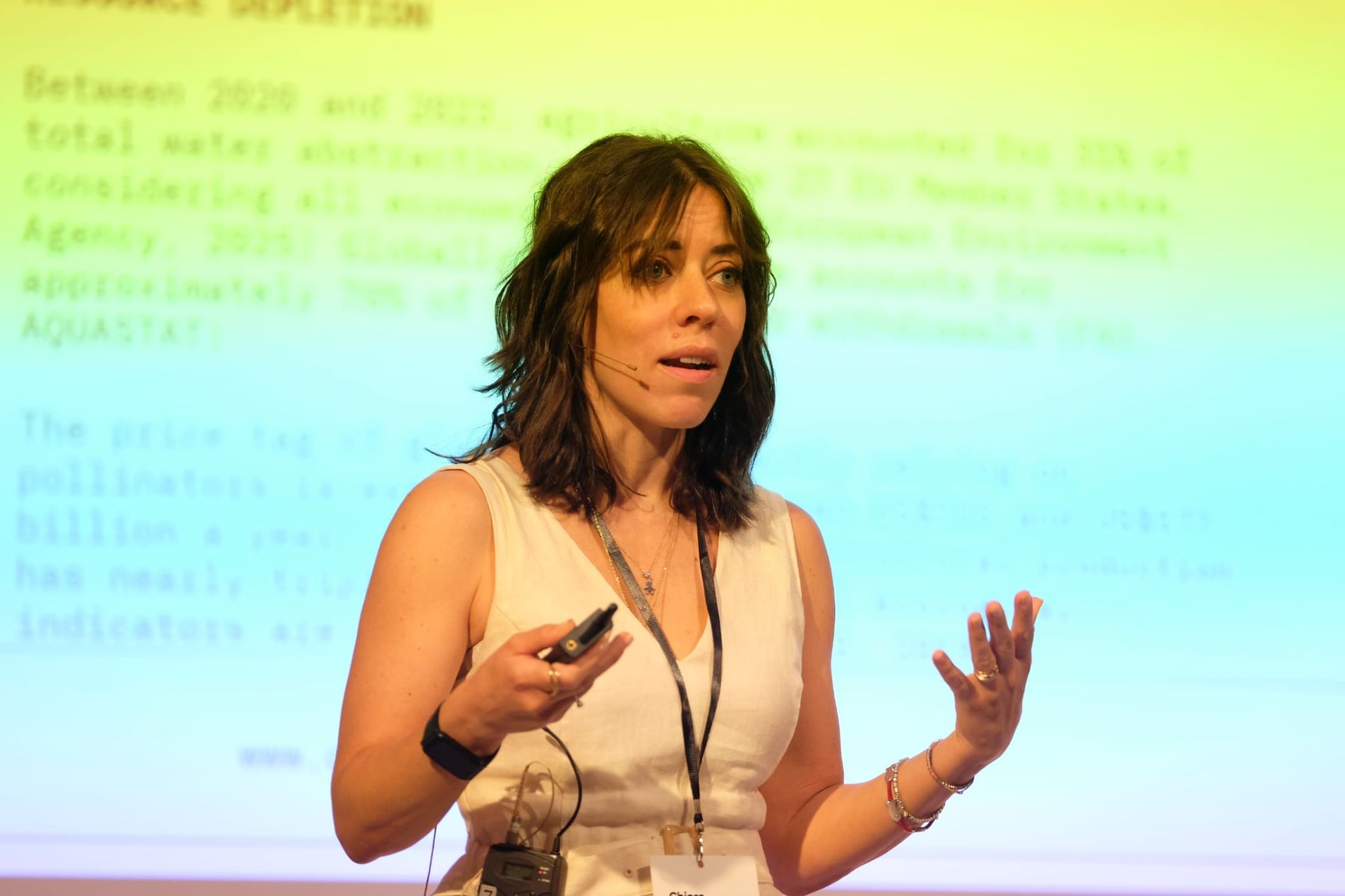
Chiara Corbo, Director of the Smart AgriFood Observatory at the Polytechnic University of Milan, provided the global context behind this transformation. According to the Observatory, 2025 marked a turning point: global investment in digital innovation for the agrifood sector increased by 21%, reaching $11.5 billion, while the number of active startups in the industry rebounded by 6% following the slowdown recorded in 2024.
"We are entering a phase of maturity: investors are no longer financing promises—they are financing scalable solutions that deliver real impact across the value chain," Corbo said. She explained that the consolidation of the ecosystem reflects a more selective approach by venture capital funds, which are increasingly focused on initiatives capable of generating measurable value throughout the entire agrifood chain.
According to the data presented by Corbo, artificial intelligence has emerged as the most widely adopted technology, with four out of five farms that have already implemented Agriculture 4.0 solutions planning to continue investing over the coming years. The most common applications include weather forecasting, irrigation and fertilization optimization, quality control, and product traceability.
The olive oil sector already offers concrete examples of these innovations in practice: drones for detecting olive fruit fly infestations and applying crop protection treatments in difficult-to-access areas; variable-rate fertilization based on spatial mapping of olive groves; and digital traceability tools that help protect products against fraud while enabling the management of large volumes of data throughout the entire supply chain.
However, Corbo also warned that poor rural connectivity, interoperability challenges between digital platforms, and cultural barriers among farmers continue to slow adoption. She called for proactive policies to support the sector's digital transition. The European Union, in its Vision for Agriculture and Food, has placed digitalization at the heart of the transition toward a more competitive and sustainable agricultural sector, expanding Horizon Europe funding dedicated to artificial intelligence and advanced technologies.
The Olive Mill of the Future: Automation, Energy Efficiency and the Circular Economy
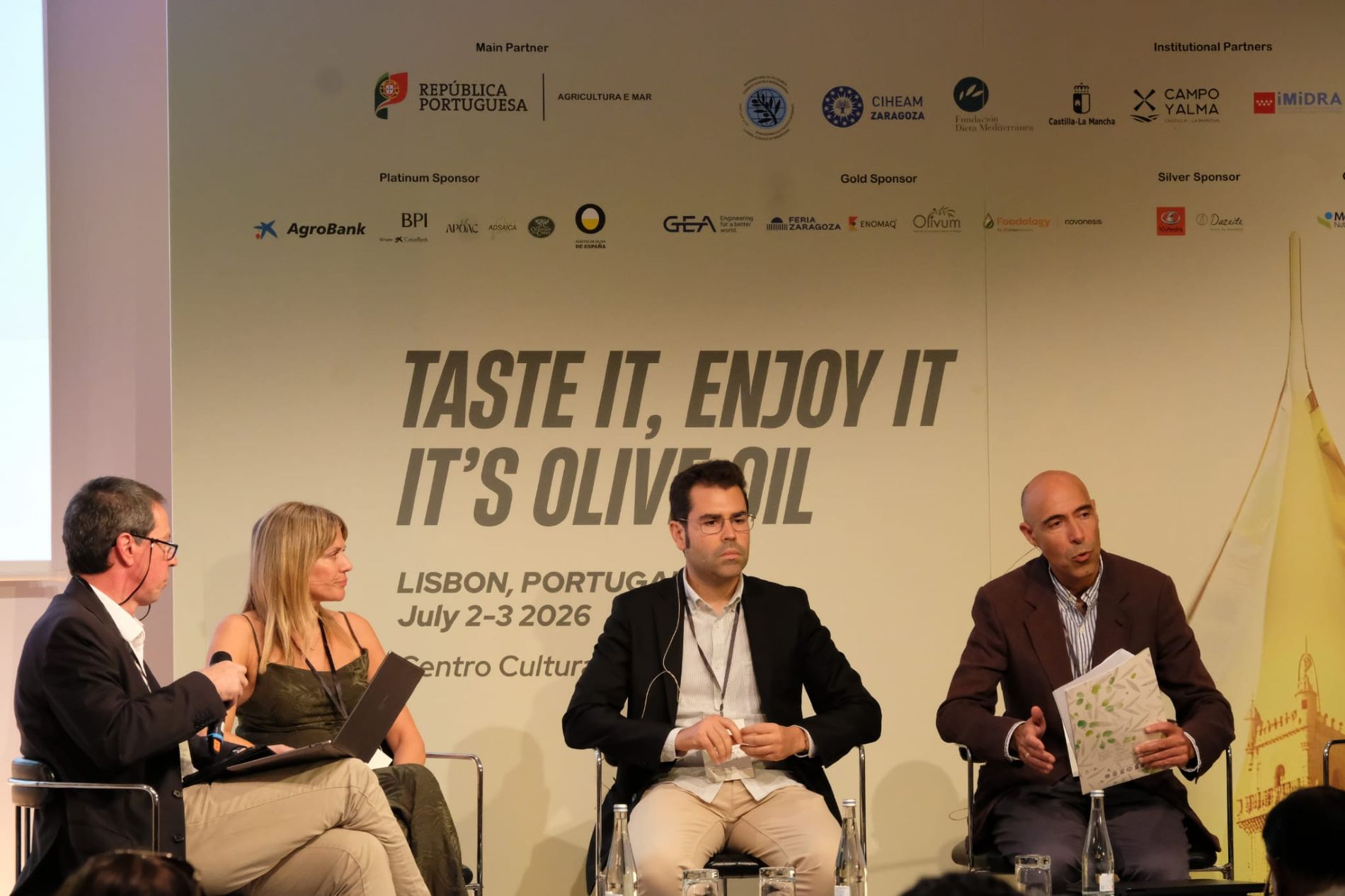
The industrial processes session featured a panel discussion entitled "The Olive Mill of the Future: Automation, Energy Efficiency and Circularity," bringing together Dolores Pérez, researcher at the University of Córdoba (UCO); Antonio López, from GEA Group; and Julián Ferrer de Prado.
The three experts agreed that the 21st-century olive mill must integrate automation systems that reduce reliance on manual labor, optimize extraction times, and ensure consistent olive oil quality. They also highlighted the importance of digital traceability in strengthening consumer confidence and helping producers differentiate their oils in premium markets.
Energy efficiency was a key focus of the discussion. Energy costs remain one of the largest operating expenses for olive mills, and the panelists pointed to significant opportunities for improvement through heat recovery during extraction processes, the integration of renewable energy sources, and the intelligent monitoring of energy consumption.
The circular economy completed the panel's three main themes. By-products generated during the extraction process—including olive pomace, olive mill wastewater, and olive pits—hold considerable industrial and energy potential that the sector has yet to fully exploit. According to the speakers, transforming these by-products into new sources of value is not only an economic opportunity but also an increasingly important sustainability requirement driven by both market expectations and evolving regulations.
These sessions are part of the packed program for the first day of the OOWC, which continues throughout the day with technical sessions on olive breeding and climate resilience, irrigation and fertilization, product quality and safety, the sensory properties of extra virgin olive oil, and the presentation of scientific posters. The day will conclude with a tasting of olive oils from around the world, followed by the awards gala.
The Congress is held with the institutional support of the International Olive Council (IOC), CIHEAM Zaragoza, and the Mediterranean Diet Foundation, together with public institutions including Portugal's Ministry of Agriculture and Maritime Affairs, the Regional Government of Castilla-La Mancha (Campo y Alma), the Government of Catalonia, the Regional Government of Andalusia, and IMIDRA.
The second edition of the Congress is also supported by a number of private-sector partners, including Olivum, AgroBank, BPI (CaixaBank Group), the Spanish Olive Oil Interprofessional Association, GEA Group, Novonesis–Univar Solutions, APOAC (Association for the Promotion of Olive Growing and Olive Oil of Aire and Candeeiros), under its commercial brand Olivedos do Carso, Adsaica (Association for the Development of the Aire and Candeeiros Mountain Range), Feria de Zaragoza (ENOMAQ), Kubota, Dazeite, and Siliker.
 Sentido Común Internet
 Agrifood Comunicación

 Only available by accessing from Safari
