
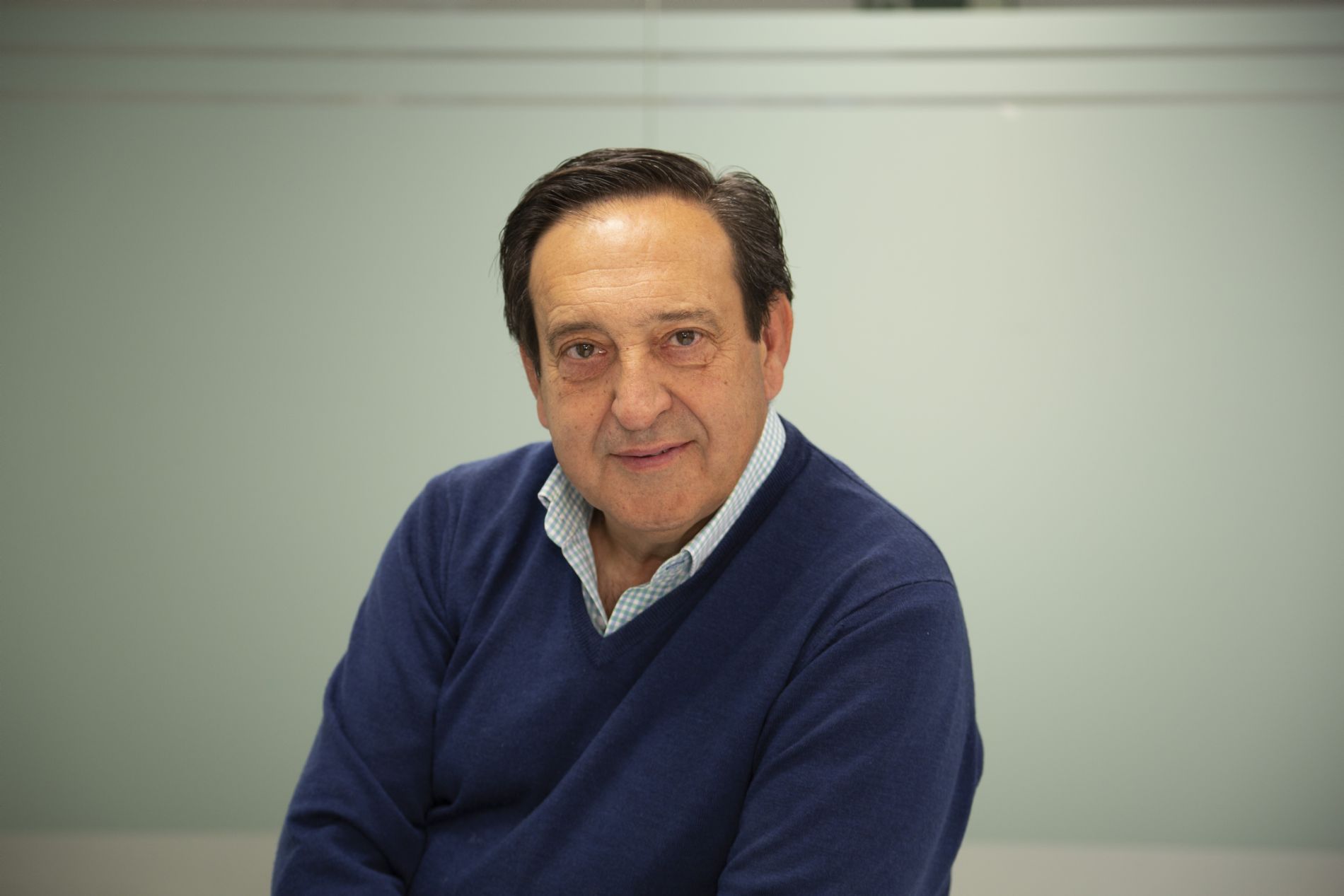
Pedro Barato, President of the Spanish Olive Oil Interprofessional Organization
As president of the Spanish Olive Oil Interprofessional, what three decisions will you make this year to drive higher value-added growth, and with which KPIs will you evaluate them (average price, repeat purchases, origin preference, etc.)?
Our ability to operate in the markets is limited to our promotional actions. These are the tools the sector is using to increase demand and, above all, to seek new market niches that allow us to give greater value to our Olive Oils. This is particularly important in the Spanish market. The first decision, therefore, is to launch a new promotional campaign aimed at the segment where we are weakest: young consumers. We have already initiated the process for this new three-year campaign, which will help broaden our consumer profile and make us less dependent on older demographics. This also means placing greater emphasis on extra virgin olive oil as an aspirational food.
The other two decisions concern the two major global markets for our product. We are finalizing two promotional campaigns: one to continue developing the U.S. market—our second-largest client after Italy—and another to consolidate the Chinese market, which experts consider the most promising for Spanish Olive Oils in the medium term.
The KPIs vary by market. In Spain, we aim to elevate the product’s perceived value and achieve quality-driven sales growth. In the U.S., one of the target indicators is the average selling price of our exports, as well as the volume of packaged product sales versus bulk.
At a time when scientific evidence, quality, and gastronomy intersect, what are your priorities in each area today, and what measurable results do you expect in 2025–2026 (studies, actions, reach, perception, and consumption)?
The areas in which we operate—promotion and support for innovation—typically require relatively long timelines to yield results. The Interprofessional has existed for only 17 years, and the impact of actions taken in the markets takes years to materialize. The same is true for innovation projects. It is only now that the sector is benefiting from the lines of work we promoted during this period.
What we are already seeing is that campaigns focused on building a strong product-country image are bearing fruit, and this effect will only grow. In fact, in the United States we now sell more packaged olive oil than bulk, a clear indication that Spain’s origin is gaining recognition in the North American market.
Regarding the “Olive Oil and Health” symposium in São Paulo—organized by the OOWC and sponsored by the Interprofessional—what key message did you convey to health and gastronomy professionals?
Above all, we wanted to convey the reality of the European Union’s quality control and food safety systems. Brazil is a country highly sensitive to food-related issues, and we wanted to dispel any doubts. But beyond food safety and quality, we wanted to communicate what Spanish Olive Oils can offer Brazilian consumers, both in terms of culinary enjoyment and health benefits.
On refillable containers in HORECA, do you see value in promoting collaborations with regions and the hospitality sector (guides, training, campaigns), or do you consider it unnecessary? If action were taken, what level of adoption do you see as realistic by 2026?
We are gathering information to quantify the scale of non-compliance with regulations, which concerns us. We are currently beginning a new round of contact with regional governments to understand how each is addressing the issue; based on that, we will make decisions. But we believe it is essential that national control plans focus on verifying compliance with current regulations governing the presentation of olive oils in restaurants.
You have warned of the risk that olive oil might become “too cheap.” Without intervening in prices, would a public information and communication mechanism (periodic reports, transparent methodology, coordinated messaging with the Administration) help avoid alarmism and stabilize expectations, or are current channels sufficient?
The information already exists. Few foods—or products in general—have as much transparency in price formation as olive oil. The Ministry of Agriculture, Fisheries and Food publishes a comprehensive monthly report detailing what has been produced, where and when, as well as flows between mills and packers, including who is stockpiling and in what quantities. In such a transparent market, there is little room for what some call speculation. We believe the best way to achieve fair prices is by enhancing the product’s value and generating solid, sustained demand over time. That is the work we have been committed to for 17 years.
In a scenario of price volatility and lower production, how can the Interprofessional contribute—through information, promotion, and communication—to balancing supply and demand without interfering with free price formation?
This is not about intervening in prices; it is about, as mentioned earlier, creating perceived value for the consumer. For a long time, consumers bought almost exclusively based on price. They were loyal, but in a very basic way. When prices rose, they would switch to another fat. Now we want to build consumers who are conscious of their purchasing decisions—who choose the product for health, for specific flavors, for experimentation, or even because they see it as a fashionable food that distinguishes those who consume or gift it. Such consumers will be willing to pay more for a food that is more than just a kitchen staple.
Following the recent update to regulations on vegetable oils, and given that the Interprofessional does not regulate or sanction, do you see the need to offer practical support to the sector (workshops, guides, materials for retail and HORECA) to improve labeling, traceability, and consumer confidence, or is this solely the Administration’s responsibility?
If we review the dozens of promotional campaigns we have launched worldwide, we see that education and training are core pillars of our work. One example is the “¿Peeerdona?” campaign, created to inform consumers and restaurateurs of the rules governing the presentation of olive oils in HORECA settings. Beyond an impactful spot, it included training activities for both professionals and consumers.
Another example is the “A Whole Experience” initiative, the first time we fully explored the varietal heritage of our olive groves. The public learned, for the first time, that not all extra virgin olive oils are the same—that some are perfect for pastries, or that the typical pungency and bitterness of extra virgins are positive attributes. Our fundamental mission is to educate about the characteristics and uses of products in this category.
 Sentido Común Internet
 Agrifood Comunicación

 Solo disponible accediendo desde Safari
