
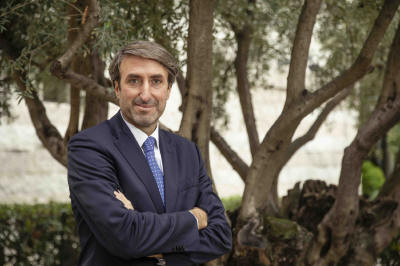
Jaime Lillo: During the last IOC meeting, held in November last year, we had the opportunity to organize a high-level gathering in which representatives from 45 countries, 28 of them at ministerial level, discussed the main challenges facing the olive oil sector and agreed on priorities, which were later formalized in the “Córdoba Declaration.” Emphasis was placed on the strategic nature of the olive oil sector: a sector that is not only deeply rooted in Mediterranean culture, but is also increasingly global and dynamic, committed to the major challenge of feeding a growing world population in a healthy and sustainable way. Key challenges were highlighted, such as climate change and the need for common standards to facilitate trade. These and other topics will be discussed by the scientific community, businesses, and national and international institutions at the next IOC meeting.
What are the main threats to the credibility of olive oil in current international markets? Is global harmonization of analytical methods urgent, and what specific measures does the IOC promote in this regard?
The IOC uses physicochemical and organoleptic analytical methods based on transparent and objective scientific studies that ensure the quality and authenticity of olive oils in international markets and protect consumers.
One of the main objectives of the IOC is to harmonize national and international standards for olive oils and table olives in order to facilitate international trade, in accordance with the International Agreement administered by the organization. The IOC has worked closely with the Codex Alimentarius for more than 60 years through its various committees: CCFO, CCMAS, CAC, and CCFFV. The IOC standard for table olives is fully aligned with Codex STAN 66-1981, while the standard for olive oils and olive-pomace oils is largely aligned with Codex STAN 33-1981, with some exceptions.
We also actively participate in Codex committees, contributing scientific studies based on data and samples from both member and non-member producing countries, whose decisions are made by expert consensus.
Its analytical methods, freely used by tasting panels and physicochemical laboratories across five continents, are compiled in document CXS234. This cooperation contributes to international harmonization, facilitates trade, strengthens consumer protection, and helps prevent fraud. The IOC also collaborates with ISO through an agreement signed in 2008 that enables accelerated adoption, and with the EU and the World Customs Organization in harmonizing standards and analytical methods.
Resource scarcity and rising costs are putting pressure on profitability: what technological solutions do you consider truly scalable?
The pressure on olive grove profitability is real and structural. Production costs have increased significantly in recent years (labor, energy, water, and inputs), while climate volatility adds uncertainty to yields. In this context, the relevant question is not what technology exists, but which can actually be applied at a scale that improves the economic situation of olive growers.
At the IOC, we have identified several technological approaches with real scalability potential, such as advanced harvesting mechanization; regenerative agriculture and soil health; circular economy and by-product valorization; improvement of extraction processes; and integrated digital management tools.
The technological agenda of the olive oil sector cannot be the exclusive domain of large players. For the technological revolution to be truly transformative, its benefits must reach all links in the value chain: from small Mediterranean olive growers to medium-sized cooperatives, including family-run mills that sustain a significant share of traditional high-quality production. The IOC’s mission is to ensure this.
Climate change is one of the most pressing challenges. What adaptation strategies do you consider most effective for Mediterranean olive groves today?
Climate change represents one of the greatest challenges for the global olive oil sector. At the IOC, an intergovernmental organization bringing together countries responsible for more than 95% of global production, we are addressing it through a global strategy that combines adaptation, mitigation, and international cooperation.
Global olive oil consumption is growing, although unevenly. Which markets currently show the greatest potential?
After the COVID-19 pandemic, there has been an acceleration in international olive oil consumption, as it led us to reflect and become more aware of the importance of health and good nutrition. This growth has been especially notable in non-traditional markets outside the Mediterranean basin, such as the United States, Brazil, Canada, Australia, and China, among others. These markets show the highest growth potential. More and more people want to follow a healthy and sustainable diet and are discovering olive oils, especially extra virgin olive oil.
In your opinion, what will be the key themes defining the future of olive cultivation over the next ten years?
From my point of view, the main challenge for olive cultivation is responding to climate change, especially in the Mediterranean basin, which currently concentrates most production. Facilitating crop adaptation to a changing climate, combating diseases such as Xylella fastidiosa, diversifying production regions and farming systems, and contributing to climate change solutions—through quantifying, improving, and communicating the carbon balance of olive groves—are the key aspects defining olive cultivation.
Naturally, modernization and technological innovation, which have accelerated in recent years, will continue to be an important factor.
At the IOC, we promote dialogue and scientific cooperation and foster consensus among experts to establish common standards that facilitate trade and protect consumer rights in an increasingly complex and globalized market. We also work in the areas of sustainability and climate adaptation, mobilizing the IOC-recognized olive genetic resources network and bringing together leading experts to support crop adaptation and improve sustainability and resilience. For example, this year we will present the results of the Olive Carbon Balance Project, an ambitious international public-private collaboration initiative aimed at providing olive growers with a digital tool to calculate their carbon balance.
This is an important step toward quantifying, improving, and communicating the contribution of olive groves, and could even represent a new source of income for olive producers.
Finally, what main message would you like to convey to producers and operators attending OOWC 2026?
The message is clear and simple: the OOWC will bring together the main stakeholders of the global olive oil sector—scientific community, leading experts, companies, institutions, and public administrations from major producing and consuming countries. It will be a unique opportunity to foster dialogue and advance on the most pressing issues affecting the olive oil sector.
 Sentido Común Internet
 Agrifood Comunicación

 Solo disponible accediendo desde Safari
