
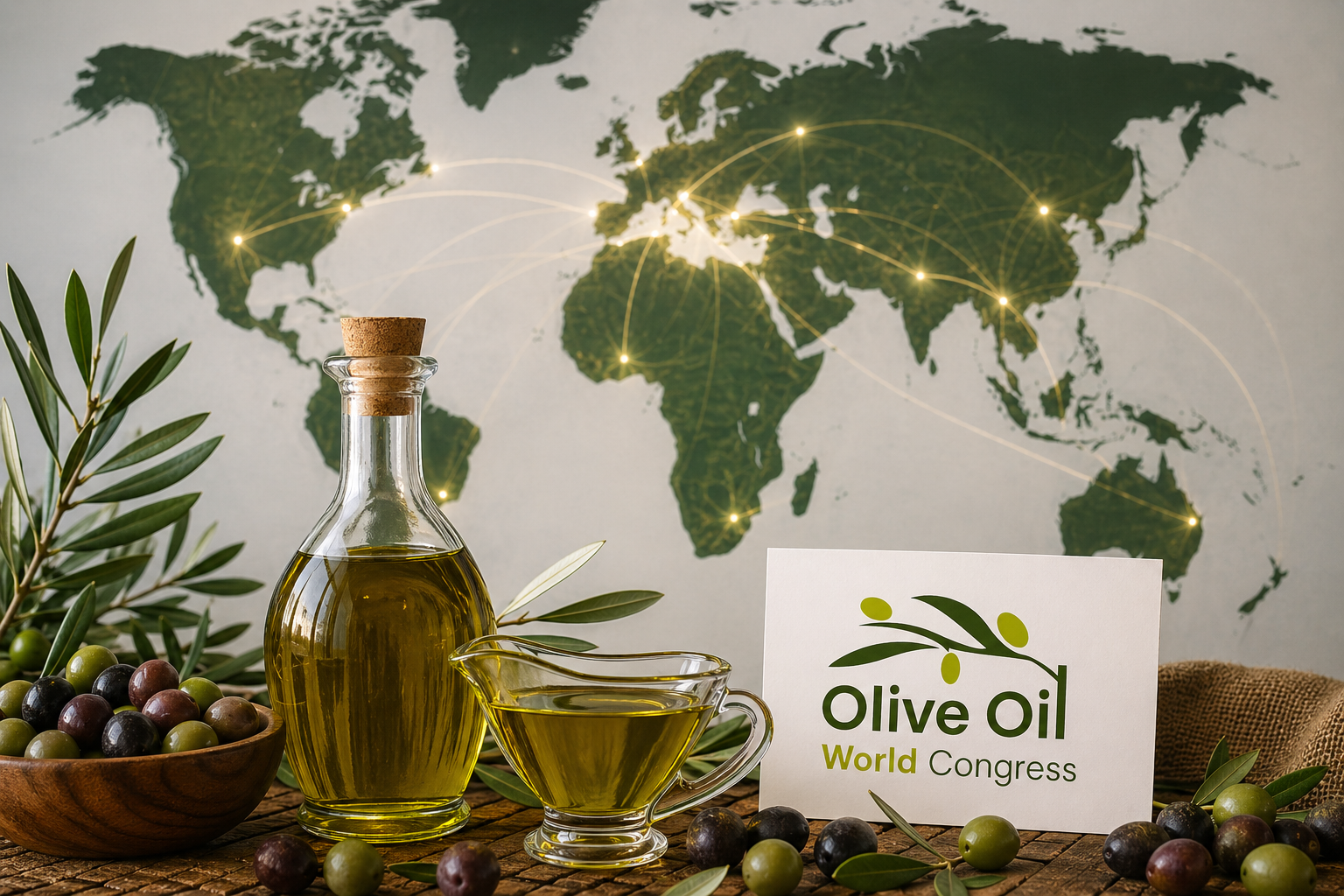
The global olive oil sector is undergoing a period of profound transformation, driven by changes in both demand and supply. According to data from the International Olive Council (IOC), global consumption has exceeded 3 million tonnes annually in recent years, fueled by the expansion of the Mediterranean diet and the growing recognition of olive oil as a key component of a healthy diet. This growth is largely explained by the emergence of new consumer countries beyond traditionally producing markets.
At the same time, the production landscape is also evolving. Although the Mediterranean basin still accounts for the majority of global output, an increasing number of developing countries are investing in olive cultivation. This shift is supported by the modernization of agricultural techniques, international investment, and the crop’s adaptability to new climatic conditions. This diversification is helping to strengthen the sector’s resilience in the face of challenges such as climate change and market volatility.
In this global context—marked by an increasingly dynamic balance between consumption and production—the Olive Oil World Congress (OOWC), to be held on July 2–3, 2026, at the Belém Cultural Center in Lisbon, will bring together international experts to analyze the key trends shaping the future of the sector. Within the program, the “Trade, Consumption and Gastronomy” block will directly address these issues through two key presentations offering complementary perspectives on the market.
The presentation “Trends in international olive oil consumption,” delivered by Abderraouf Laajimi (International Olive Council), will analyze global market trends with a particular focus on consumption patterns. His talk will provide context for growth in markets such as the United States, Asia, and certain regions of the Middle East, where olive oil is becoming an increasingly established product. It is also expected to address topics such as changing consumer habits, the influence of economic factors on demand, growing competition from other vegetable oils, and the importance of strengthening promotion and communication strategies to sustain consumption growth.
Meanwhile, the presentation “Olive oil production in developing countries,” delivered by Juan Vilar, will focus on the expansion of olive cultivation in developing nations. This phenomenon is gaining increasing relevance on the global stage and is contributing to global production reaching levels close to 3.5 million tonnes in recent seasons, also according to estimates from the International Olive Council. The presentation will explore the growth potential of these emerging regions, as well as the challenges linked to their consolidation, including the need for investment, technology transfer, technical training, and sustainable production models.
Both presentations highlight the close relationship between consumption trends and global production capacity, in a context where the sector must adapt to multiple challenges such as the impact of climate change on harvests, price volatility at origin, pressure on production costs, and the need to ensure product quality and traceability. At the same time, they underscore the opportunities presented by internationalization, both from a commercial and production standpoint.
All individuals, companies, or public and private institutions in the olive oil sector interested in participating in this Congress can register via the following link: https://www.oliveoilworldcongress.com/inscription
The Congress already has the institutional support of the International Olive Council, CIHEAM Zaragoza, and the Mediterranean Diet Foundation, along with public entities such as the Spanish Ministry of Agriculture, Fisheries and Food (Alimentos de España), the Portuguese Ministry of Agriculture and the Sea, the Government of Castilla-La Mancha (“Campo y Alma”), the Government of Catalonia, and IMIDRA.
In the private sector, this second edition is currently supported, in addition to Olivum, by entities such as AgroBank, GEA Group, Kubota, Feria de Zaragoza (ENOMAQ), Dazeite, and Siliker.
From the OOWC, we invite everyone to be part of this collaborative international project, encouraging them to explore partnership and sponsorship opportunities. Further information is available through the OOWC Technical Secretariat by calling +34 91 721 79 29 or emailing info@oliveoilwc.com.
 Sentido Común Internet
 Agrifood Comunicación

 Only available by accessing from Safari
