
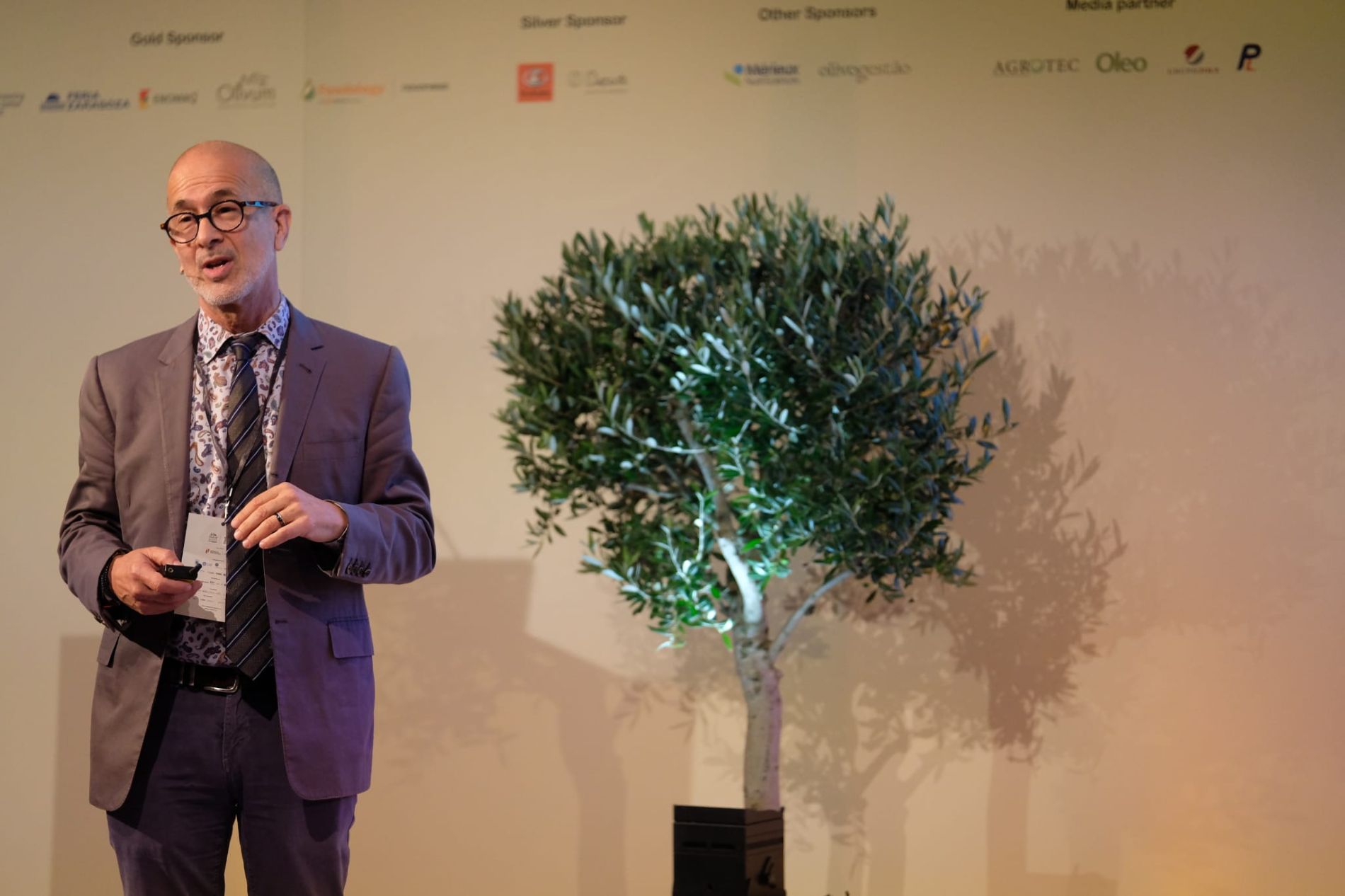
On its final day, the Olive Oil World Congress (OOWC) featured a session that focused on one of the sector’s major remaining challenges: how to communicate the true value of extra virgin olive oil (EVOO) in an increasingly competitive global market saturated with information.
Under the title “Marketing, Consumption, and Communication of Olive Oil: The Keys to the Sector’s Global Growth,” the session brought together three complementary perspectives—European, Mediterranean, and North American—which, taken together, outline a roadmap for the sector’s next phase of expansion.
Teresa Pérez, manager of the Interprofessional Organization of Spanish Olive Oil, opened the session by reviewing two decades of communication strategy, which clearly illustrate how the way olive oil is presented to the world has evolved.
Pérez explained that the starting point, which began in the late 2000s, was particularly complex: the challenge was to simultaneously reach consumers with radically different perceptions of the product—ranging from those in a mature market like the United States to those in markets such as China or India, where olive oil was known for little more than its cosmetic use. In that initial phase, the organization focused on promoting EVOO, relying on institutions already established in those markets, confident that Spain’s commercial leadership would work in its favor.
The first major turning point came in 2013, with two simultaneous decisions: the name change to Aceites de Oliva de España—designed to build a powerful brand image geared toward the international market—and the launch of the European Union-co-funded campaign “Aceites de Oliva, Toda una Experiencia” (“Olive Oils: A Whole Experience”), focused on the culinary values of extra virgin olive oil and the rich variety of Spanish olive groves. According to Pérez, it was this campaign that opened up store shelves to varieties such as Hojiblanca, Cornicabra, and Picudo.
That period was followed by the Olive Oil World Tour (2018–2020), the organization’s first truly global campaign, structured around three distinct initiatives under a single philosophy and tailored to each market: Spain, France, Germany, the United Kingdom, Belgium, the Netherlands, the United States, China, Japan, and Taiwan.
The boldest leap came in 2025 with the campaign “Extra Virgin Olive Oil: The Perfect Companion,” in which, for the first time, the organization linked its image to fashion and music through icons of Generations Z and Y: the Córdoba-based designer Palomo Spain and the singer Aitana. Its goal: to attract a younger olive oil consumer—not by changing the product, but by changing the way it’s presented.
The Information Trap
Joseph R. Profacci, director of the NAOOA, highlighted a paradox that is uncomfortable for the sector itself: although olive oil has undergone one of the food industry’s most successful category transformations—from a regional ingredient to a global symbol of health and culinary excellence—that success has a flaw. In the United States, imports have grown by 50% over the past decade, but the percentage of households purchasing olive oil has not increased during that same period.
Profacci pointed to the overabundance of information—harvest dates, cultivars, sensory attributes, polyphenols, origins, certifications, and production methods—which creates more confusion than confidence for consumers approaching the shelf for the first time. “When a purchasing decision starts to feel complicated, consumers hesitate, postpone the purchase, or choose alternatives that seem simpler,” he warned.
The solution he proposed is to build trust through clear and accessible messages focused on the three factors that most influence purchasing decisions: taste, health, and functionality. He also advocated for a practical communication framework based on the “Good, Better, Best” model, designed to encourage participation in the category rather than demand perfection from the very first interaction. The ultimate goal set by Profacci is to make olive oil the default cooking oil in kitchens around the world, “educating without intimidating,”
The Paradox of Liquid Gold
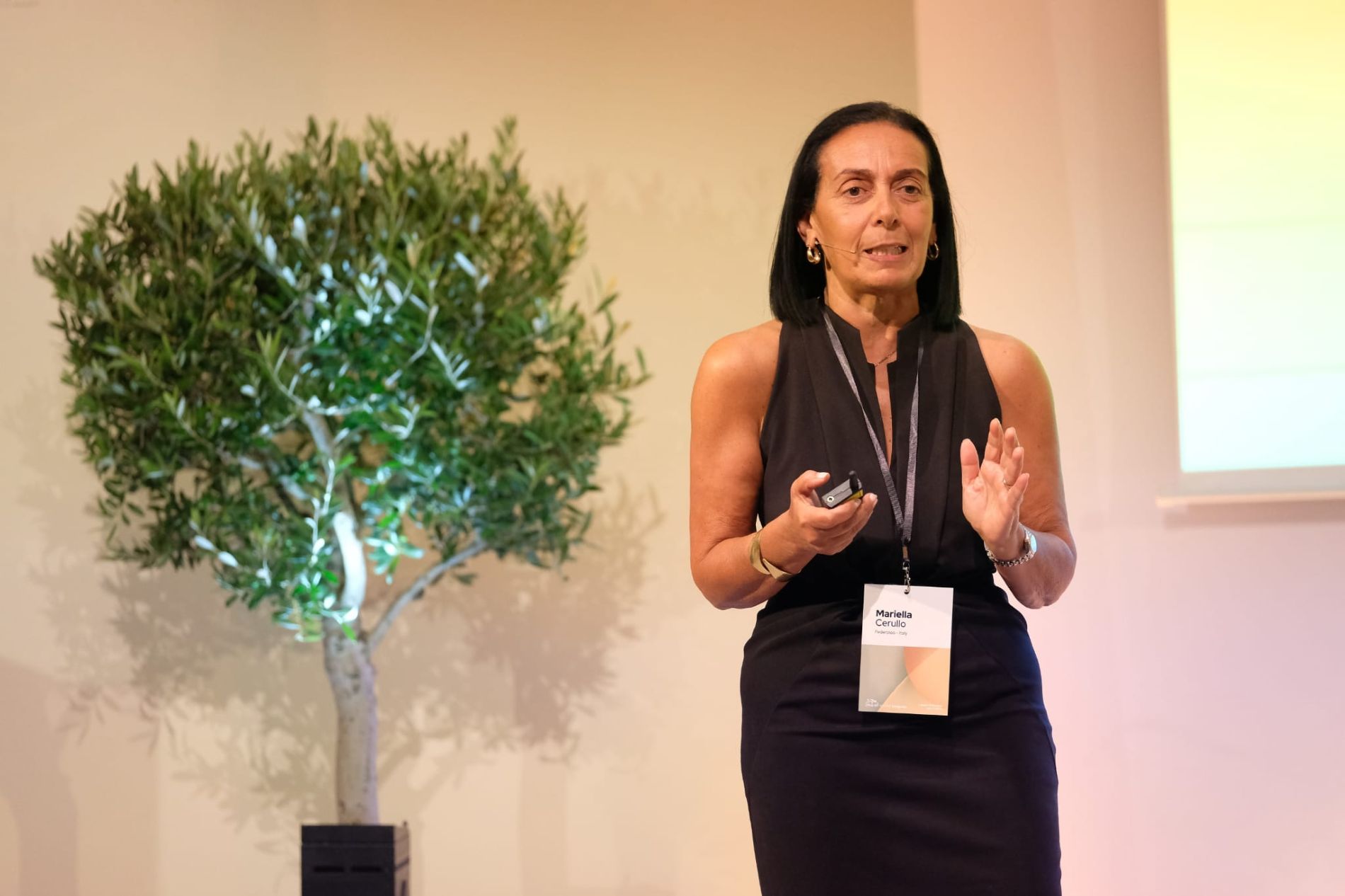
Mariella Cerullo, a representative of Federolio, closed the session by pointing out the structural contradiction that weighs down the sector: extra virgin olive oil has one of the most solid scientific evidence bases among dietary fats—backed by clinical studies on the Mediterranean Diet—and yet it continues to be perceived and marketed largely as a commodity, with its value tied to price rather than its distinctive attributes.
Cerullo identified two structural causes. The first is pressure from large-scale retailers and the proliferation of private-label brands, which squeeze margins throughout the entire supply chain. The second is an information asymmetry: within the same legal threshold, olive oils coexist that differ profoundly in polyphenol profile, freshness, variety, and sensory identity, yet consumers lack the tools to distinguish them. “The key to marketing isn’t explaining what extra virgin olive oil is, but telling the story of what lies beyond the legal minimum,” he summarized.
As a benchmark, he pointed to the journey undertaken over a generation by wine and specialty coffee: products that went from being undifferentiated to goods with strong narrative value built around origin, variety, method, and the figure of the producer. Olive oil, he argued, possesses the same ingredients but has not yet organized them into a coherent international strategy.
On the competitive front, Cerullo called for a realistic approach for countries like Italy, which cannot compete in terms of volume with the major producers but can leverage their unparalleled varietal biodiversity—CREA has registered more than 600 varietal designations, a figure that the research itself considers provisional due to synonyms that have yet to be resolved—to build a narrative of origin comparable to what designations of origin have achieved in the wine sector. He cautioned, however, that in more mature markets, simply declaring “Italian origin” is no longer enough: informed consumers demand more sophisticated layers of storytelling.
As a unifying narrative framework, he proposed sustainability in the broadest sense—environmental, social, cultural, and health-related—and highlighted the EU-authorized claim regarding polyphenols as a verifiable lever for premium positioning: Regulation (EC) No. 1924/2006, based on the EFSA’s assessment, requires a minimum of 5 mg of hydroxytyrosol and its derivatives per 20 grams of oil in order to make the claim.
Against a backdrop of climate volatility and rising prices in recent harvest seasons, he concluded, a strategic window of opportunity has opened to reposition the price of olive oil—not as an unjustified increase, but as a reflection of the true value of a quantitatively limited, healthy agricultural product with its own distinct identity.
The Congress has the institutional support of the International Olive Council (IOC), CIHEAM Zaragoza, and the Mediterranean Diet Foundation, along with public entities such as the Portuguese Ministry of Agriculture and Maritime Affairs, the Regional Government of Castilla-La Mancha (“Campo y Alma”), the Government of Catalonia, the Regional Government of Andalusia, and IMIDRA.
In the private sector, in addition to Olivum, this second edition is currently supported by organizations such as AgroBank, BPI (part of the Caixabank Group), the Interprofessional Association for Spanish Olive Oil, GEA Group, Novonesis-Univar Solutions, APOAC (Association for the Promotion of Olive Groves and Olive Oil from Aire and Candeeiros) with its brand “Olivedos do Carso,” Adsaica (Association for the Development of the Aire and Candeeiros Mountains), Feria de Zaragoza (ENOMAQ), Kubota, Dazeite, and Siliker.
 Sentido Común Internet
 Agrifood Comunicación

 Only available by accessing from Safari
