
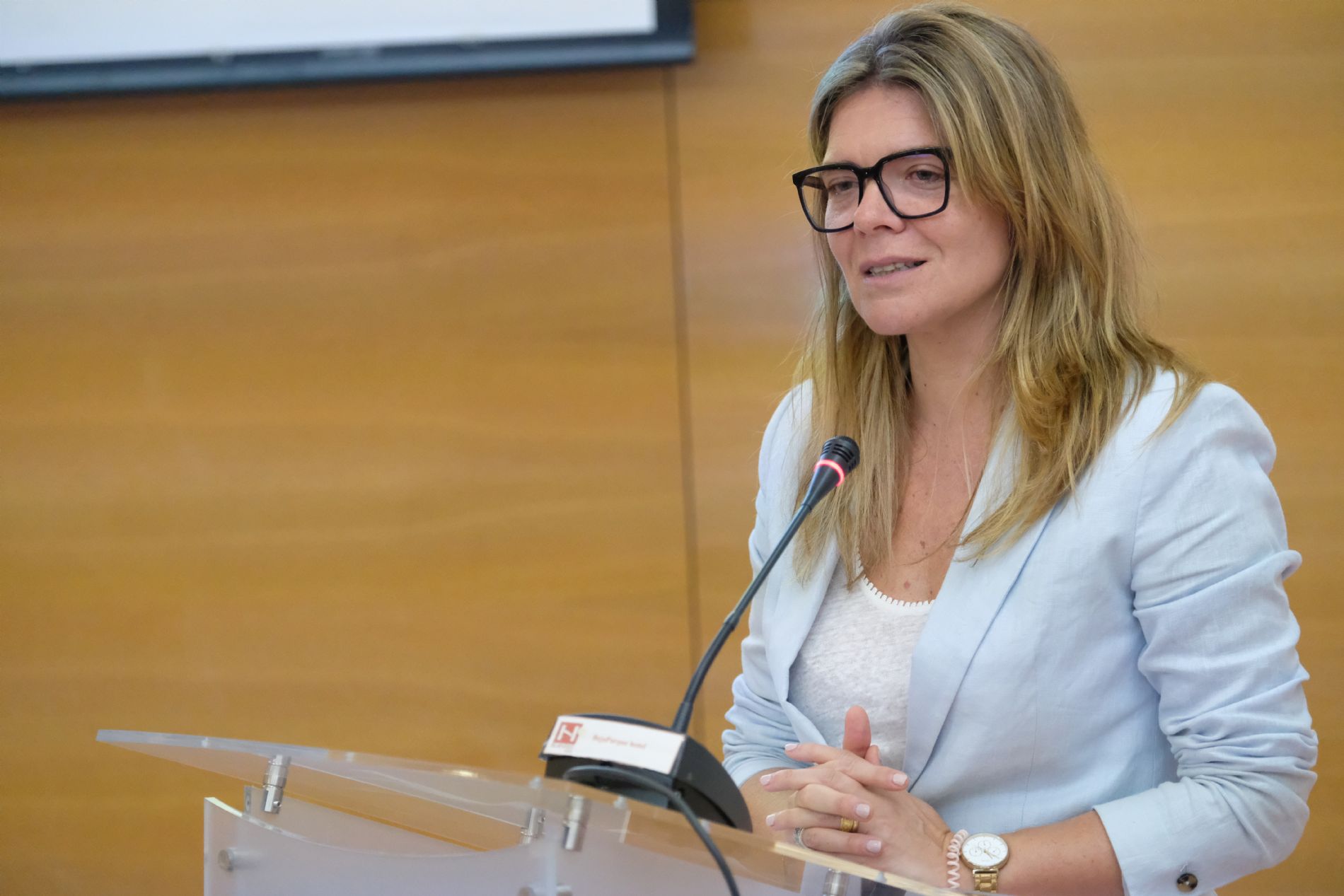
The Portuguese Alentejo region hosted a new stop of the international initiative “En route to OOWC 2026.” Specifically, the city of Beja was chosen for a new meeting promoted within the framework of the Olive Oil World Congress (OOWC), which brought together institutional representatives, experts, and professionals from the olive oil sector to analyze the major challenges and opportunities of olive oil in the international context.
The event focused on the growing prominence of Portugal within the European and global olive oil sector, as well as the need to consolidate its position as a producing country in a scenario marked by global competitiveness, sustainability, innovation, and changing consumption patterns.
The event was opened by Pedro Lopes, president of OLIVUM, and Susana Barradas, deputy director-general of the Gabinete de Planeamento, Políticas e Administração Geral (GPP), who highlighted the strategic importance of olive oil for Portugal’s agricultural economy and the role this sector should play in the coming years.
During the opening session, Ricardo Migueláñez, coordinator of the Olive Oil World Congress, which will be held in Lisbon on July 2–3 at the Belém Cultural Center, presented the main updates for OOWC 2026, emphasizing that the Congress will be a major international meeting point for the olive oil sector at a key moment for its future.
One of the central moments of the event was the round table titled “Portugal faces the challenge of the global olive oil market,” moderated by Gonçalo Moreira, manager of Olivum, with participation from representatives of leading Portuguese olive oil producers, bottlers, and marketers.
Speakers included Álvaro Labella, executive director of Olivogestão; Mariana Matos, secretary-general of Casa do Azeite – Portuguese Olive Oil Association; and José Duarte, vice-president of the Confederação dos Agricultores de Portugal (CAP).
During the debate, participants agreed that Portugal has undergone an extraordinary transformation over the past two decades, becoming one of the major international players in the sector thanks to the modernization of olive groves, increased production capacity, and a growing export orientation of Portuguese olive oil.
However, the speakers also warned of the challenges the Portuguese olive oil sector will face in the coming years, especially in areas such as improving commercialization, sustainability, efficient water management, and adaptation to climate change, as well as ensuring profitability in increasingly competitive and demanding markets.
During the event, Moreira highlighted that the meeting was an ideal space to reflect on the challenges facing the sector, as a prelude to the debates expected at OOWC, the World Congress that will bring together the main players in global olive growing in Lisbon “to boost a strategic chain for the Portuguese economy.”
The managing director of Olivum, the association representing 70% of Portugal’s olive oil production, also valued the opportunity to moderate the debate, stating that “this round table allows for a very enriching reflection on our challenges and on how to promote Portuguese olive oil, both within and beyond our borders.”
Similarly, Labella emphasized that the event served to “open a deep debate on the opportunities and challenges facing Portuguese olive oil in the future, also addressing key strategies to consolidate its position on the global stage.” He added that “this reflection anticipates the spirit and great potential of the two upcoming days in the Portuguese capital.”
Duarte highlighted that the discussion itself was recognition of “the importance of our region as a global reference in olive growing, distinguished by the innovation, technology, and productivity of its olive groves and mills.”
He also stressed that the path forward involves focusing on bottled products and adding value to origin and quality. To achieve this, Duarte advocated for greater internationalization of Portuguese olive oil “through an interprofessional structure that brings together the entire chain under the ‘Azeites de Portugal’ label.”
The event concluded with remarks by Liliana Cabecinha, vice-president of the Beja City Council.
All individuals, companies, and public or private institutions in the olive oil sector interested in participating in the Olive Oil World Congress (OOWC) can register via the following link: https://www.oliveoilworldcongress.com/inscription
The Congress already has institutional backing from the International Olive Council (IOC), CIHEAM Zaragoza, and the Mediterranean Diet Foundation, along with public entities such as the Portuguese Ministry of Agriculture and Maritime Affairs, the Castilla-La Mancha regional government (‘Campo y Alma’), the Government of Catalonia, and IMIDRA.
In the private sector, this second edition is supported, among others, by Olivum, AgroBank, the Spanish Olive Oil Interprofessional, GEA Group, Novonesis, APOAC (Association for the Promotion of Olive Groves and Olive Oil of Aire and Candeeiros) with its commercial brand ‘Olivedos do Carso’, Adsaica (Association for the Development of the Serra de Aire and Candeeiros), Feria de Zaragoza (ENOMAQ), Kubota, Dazeite, and Siliker.
From OOWC, we invite everyone to take part in this international collaborative project, encouraging exploration of cooperation and sponsorship options, and providing all necessary information through the OOWC Technical Secretariat by calling +34 91 721 79 29 or emailing info@oliveoilwc.com.
Image download link: https://we.tl/t-5TMX8D3Ofm1AUSou
 Sentido Común Internet
 Agrifood Comunicación

 Only available by accessing from Safari
