
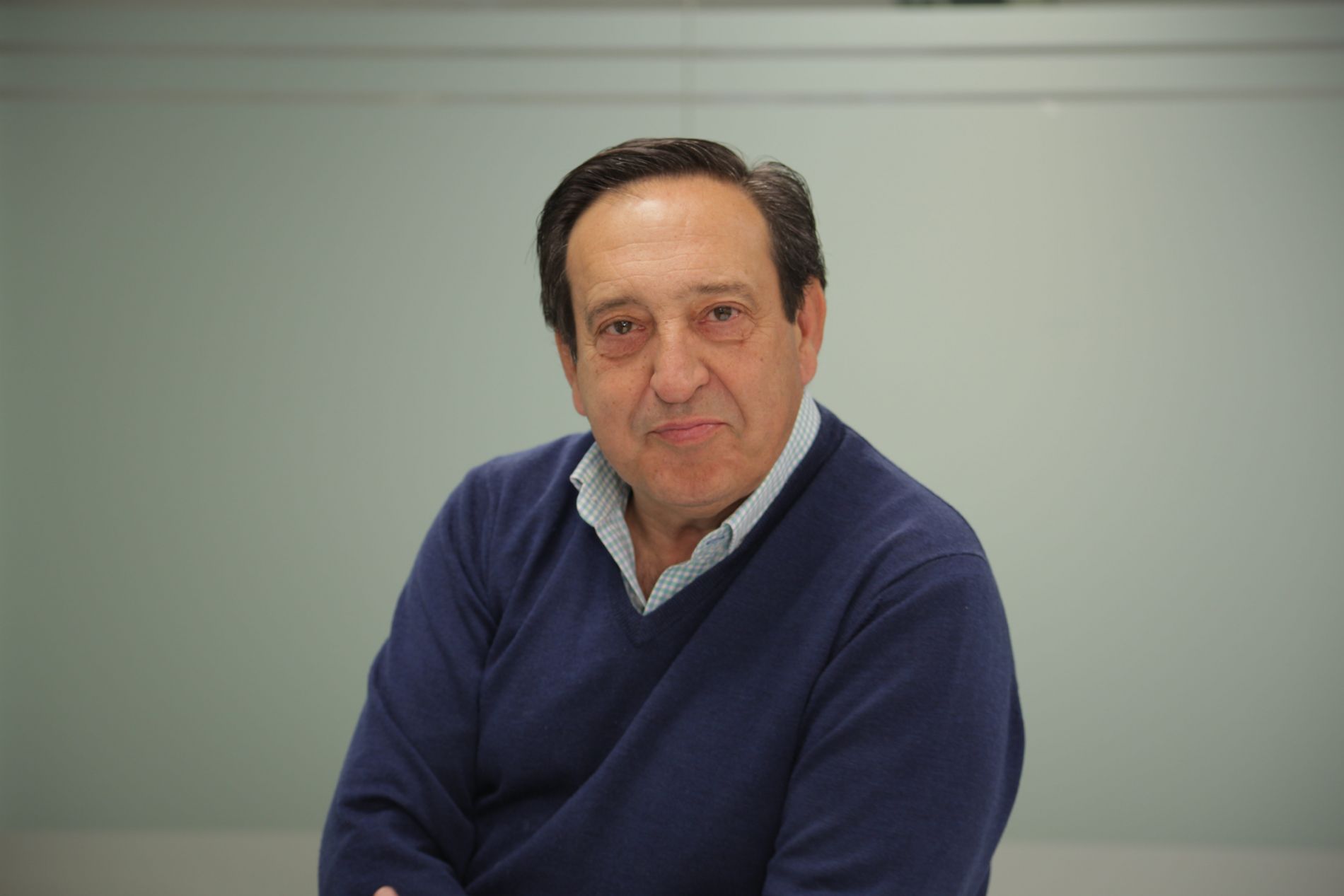
Pedro Barato. President of the Spanish Olive Oil Interprofessional Organization
After several campaigns marked by drought, inflation, and price tensions, how do you assess the current situation of the Spanish olive oil sector and what prospects do you see for the coming years?
Looking at the background referred to, the first thing that comes to mind is to describe this campaign as “normal.” However, thinking carefully, we must consider that in an olive oil campaign, both at the production and marketing levels, so many factors converge that it is difficult to call any campaign normal or calm. The clearest example is the tariff war unleashed by the United States, which at certain points has influenced the decisions of our companies. Or even the war in the Middle East, which has again pressured input prices, causing problems for our farmers and businesses. The truth is that every new campaign is a challenge. Nevertheless, we are experiencing a year marked by phenomena such as a slight drop in production, down to around 1.3 million tons, and by sales that are up compared to last year. Everything indicates that we will close the campaign with domestic consumption at around half a million tons and exports around 1.1 million tons. A figure in line with the campaigns we used to call “normal,” as previously mentioned. Regarding prices, extra virgin olive oil has clearly moved above four euros, more than 50 cents higher than a year ago and 60 cents more than two years ago. In fact, by the end of May, the average price of all categories, excluding pomace oil, had risen more than 12% since the beginning of the campaign. But as the countdown to the new harvest approaches, nerves and bets begin about how the linkage, prices, global demand, etc., will be… We have no doubt that the future for our Olive Oils is promising. We have customers around the world who want to eat healthy and with more flavor, and we have the food they need. Just one figure: today, two million more tons of olive oil are consumed than three decades ago. Everything produced is sold.
Global olive oil consumption continues to grow in non-traditional markets such as the United States, Asia, or Latin America. What real opportunities do these markets represent for Spanish olive oil?
We must begin updating the labels of traditional and emerging markets. The United States is about to surpass Spain and Italy as the drivers of global consumption. This officially confirms a trend that began decades ago: we are moving from a consumption model centered in the Mediterranean to a much more dispersed one, with consumption hubs around the globe, led by the United States, China, Brazil, South Korea, the United Kingdom, and Australia… And the truth is that our sector has adapted to this new reality remarkably quickly. The data are very clear. In 2009, when the Spanish Olive Oil Interprofessional Organization was taking its first steps in international promotion, the European Union was the destination for 82% of all olive oil we exported. America was the only continent with some weight in our client portfolio, at 10%, while Asia accounted for 5%. Now things are very different. Although sales have continued to grow in Europe, it now represents around 60% of our global sales. The share in America has soared to 21%, Asia has reached 13%, and Oceania now accounts for 3% of our total sales. It is expected that Europe’s weight will continue to decrease compared to third countries, led by the United States. In America, we must also highlight Brazil and Canada. In Asia, China is the main driver of consumption growth, not forgetting the strength of South Korea and the solid value that Japan represents. The Interprofessional Organization launched a two-year promotional campaign in China several weeks ago, and soon we will launch in the United States our most ambitious promotional initiative in history.
Sustainability has become a priority for consumers and institutions. What progress is the Spanish sector making in regenerative agriculture, water efficiency, and reducing environmental footprint?
It is true that sustainability is gaining increasing prominence in global consumer purchasing decisions, but it is still far from mobilizing consumers as much as health does, which is the main purchase driver among new consumers. In fact, marketing experts tell us that buyers now automatically expect the food they purchase to be sustainable. This means that either we are sustainable, or we are out of the market. It’s that simple. Fortunately, we are one of the sectors in our agro-industry that has best embraced this challenge. We are a clear example of a circular economy, where the concept of waste has disappeared, achieving greater environmental efficiency and, incidentally, economic efficiency. Examples of this commitment abound. We are the leading woody crop in our country by irrigated area, while also being the most efficient. Almost all of it is irrigated with highly modern localized systems, which ensure optimal use down to the last drop of water allocated to olive groves. In this field, we benefit from researchers at the forefront of resource and process optimization, both in the field and in the industry. Their work allows us to remain at the cutting edge, with the Interprofessional Organization contributing through support and funding. We can cite our contributions to the LIFE Olivares Vivos and Olivares Vivos+ projects, as well as to European-awarded initiatives to reduce soil erosion in olive groves, one of the Mediterranean’s major problems, and efforts to mechanize cultivation with low-impact equipment.
In recent years, the debate on olive oil quality, traceability, and authenticity has increased. What challenges remain in combating fraud and misinformation in the international market?
It is true that this debate is recurring. But at the same time, we must put things in perspective. I am not the only one saying this; I refer to the European Court of Auditors’ report on Olive Oil Control in the European Union. Spain performs very well in this analysis thanks to its product control and traceability systems. Let us not forget that in Spain we apply standards far stricter than those established by EU legislation. This makes sense, because there is a lot at stake in terms of reputation, which can affect our sales worldwide. We live in a globalized world where everything spreads at breakneck speed. We are the most interested in ensuring that the quality of our product is beyond any doubt. For this reason, the Spanish Olive Oil Interprofessional Organization has promoted what we call the Excellence Proposal for Quality and Transparency of Olive Oils. The proposal is based on two pillars: a voluntary quality self-control system that involves both process and product control, always monitored by an independent body; and the optimization of information use declared by sector entities to Public Administrations. We are confident that this initiative will put an end to this recurring debate, at least regarding Spanish Olive Oils.
What impact do you believe technological innovation—from artificial intelligence to precision agriculture—will have on olive oil production and marketing?
The most visible face of the Spanish Olive Oil Interprofessional Organization is its promotional work worldwide. However, we must also consider that year after year we have consolidated as a driver of sector innovation. On average, we allocate 11% of our budgets to the promotion and funding of R&D&i projects in agronomy, nutrition and health, and food technology. We do this because we are aware that innovation and its rapid application to our olive groves and companies was what sparked the revolution in this sector at the end of the last century. This explains why we have become the most productive, efficient, and sustainable olive-growing region on the planet. It is the foundation of our leadership in markets worldwide. Based on this idea, we are clear that we cannot stop this process; on the contrary, we must nurture it to stay at the forefront.
After the experience of the first edition, why was it important to consolidate the Olive Oil World Congress as a major international meeting point for the sector?
Olive oil is a global product, and we have had to adapt to this reality. We sell our product in more than 170 countries worldwide, a number that continues to grow, and customers want to have a voice in how food is produced and marketed. At the same time, relationships among producing countries are increasingly interdependent. We share similar challenges and even collaborate on research in sensitive areas such as sustainability and disease control. Having a high-level forum like this, where experiences can be exchanged, enriches the sector. After all, we all share a common interest.
What will be the main topics shaping the agenda of this second edition of the Olive Oil World Congress, and what role will science and innovation play in the congress?
Without a doubt, innovation. All topics of concern to the sector will be addressed, from production to industry, to achieve a better product. It will be interesting to see the real applications of artificial intelligence in our processes, from the field to marketing. I also believe that health will be another key focus of the discussions. Let us not forget that wellness is our greatest sales argument worldwide.
 Sentido Común Internet
 Agrifood Comunicación

 Solo disponible accediendo desde Safari
