
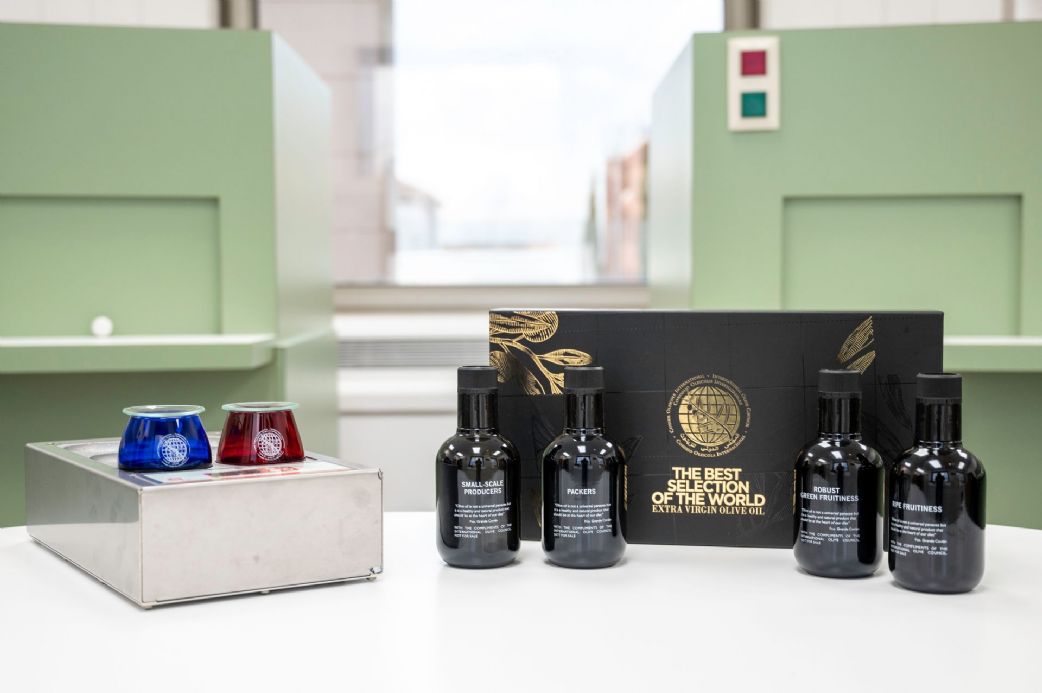
The International Olive Council (IOC) announced the winners of the 26th edition of the Mario Solinas Quality Award, which continues its more than two-decade trajectory highlighting the excellence of extra virgin olive oils (EVOO) worldwide.
In this edition—launched in July 2025—122 oils from Algeria, China, Spain, France, Greece, Iran, Italy, Jordan, Morocco, Portugal, and Tunisia were submitted.
Following a rigorous sensory evaluation carried out by an international jury composed of expert tasters, Spanish oils stood out by winning 15 of the 20 awards presented. They were followed by Italy (3), Tunisia (1), and China (1).
These oils were submitted by individual producers, associations, and bottling companies and, according to the competition rules, were classified into the following categories: intense green fruity, medium green fruity, light green fruity, ripe fruity, small producers, and packers.
The oils presented in this edition underwent a rigorous sensory evaluation process using the IOC Panel platform, developed by the Fundación del Olivar.
The international jury, made up of nine expert tasters, evaluated the participating oils based on the olfactory, gustatory, and retronasal sensations of each sample, as well as their harmony, complexity, and persistence.
As stated by Jaime Lillo, Executive Director of the IOC, “this competition reaffirms the IOC’s commitment to excellence in the production of extra virgin olive oil, recognizing the hard work and dedication of those who transform olives into a unique and healthy product. It also aims to show consumers the diversity of taste and aroma sensations offered by these oils.”
The award ceremony will take place on June 18, 2026, at the IOC headquarters in Madrid, where the winners will be honored.
A Product Full of Nuances
The “Mario Solinas” Award was established in 1993 in honor of Prof. Mario Solinas, who played a crucial role in developing the first scientific method for the organoleptic evaluation of virgin olive oil.
Unlike other foods, the quality of virgin olive oil is not based solely on chemical parameters but also on the sensory perception of its attributes, which vary depending on the olive variety, climate, and extraction techniques.
This process, which combines science with human experience, ensures market authenticity and transparency, promoting excellence in the production of extra virgin olive oil (EVOO) and, ultimately, protecting consumers. Sensory analysis allows extra virgin olive oils to be classified according to their organoleptic characteristics, such as fruitiness and the presence of other positive attributes such as bitterness and pungency.
These attributes, evaluated by tasting panels recognized by the IOC, define the sensory identity of each oil and are essential for categorizing it as green fruity (intense, medium, or light) or ripe. Over the years, the IOC has expanded the scope of the award by introducing an edition organized in the Southern Hemisphere starting in 2024, with the aim of encompassing the diversity of origins, varieties, and climates that enrich the world of extra virgin olive oil.
LIST OF THE 20 EVOOs AWARDED IN THE “MARIO SOLINAS” AWARD – IOC NORTHERN HEMISPHERE EDITION
 Sentido Común Internet
 Agrifood Comunicación

 Solo disponible accediendo desde Safari
