
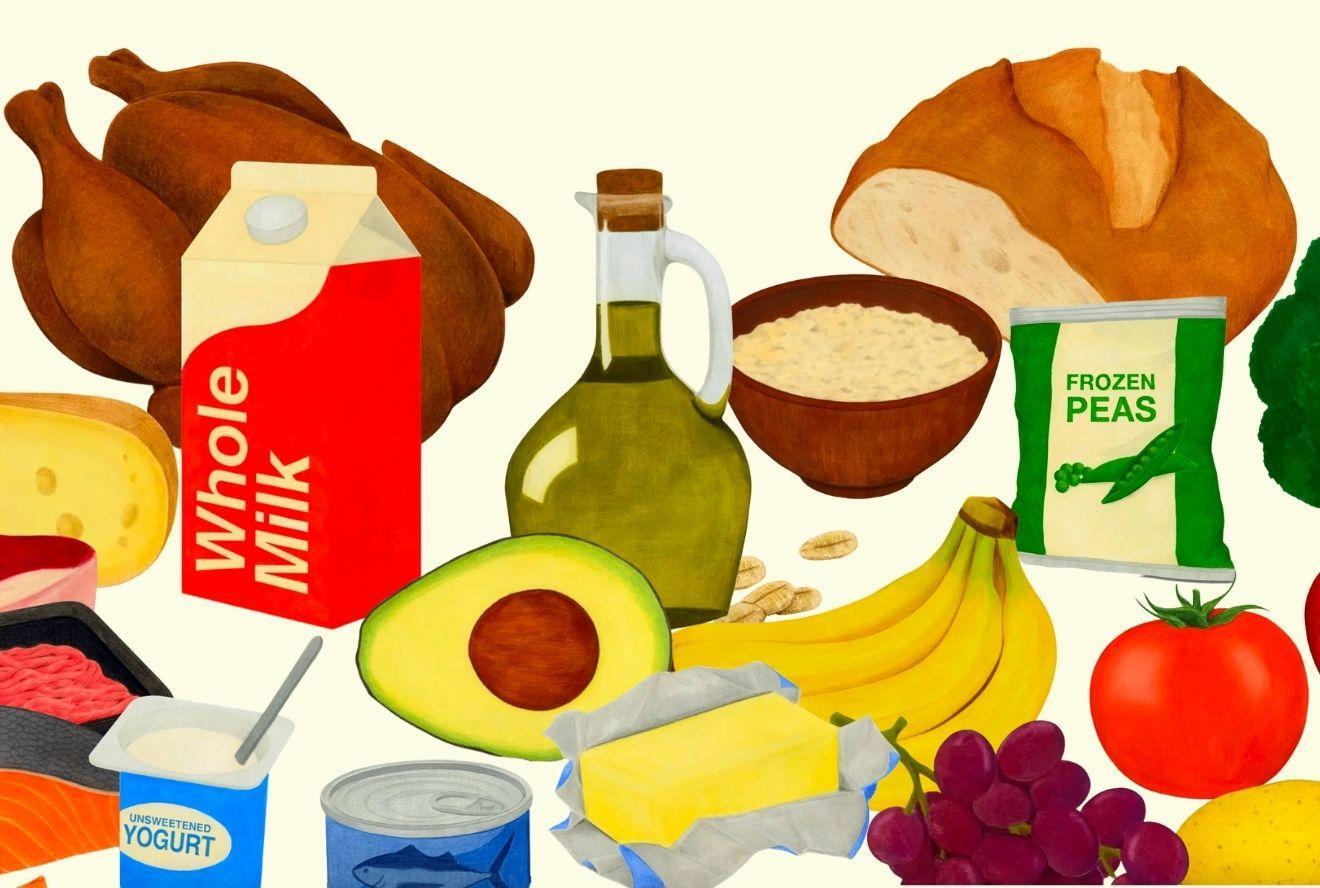
The FDA and the USDA recently released the Dietary Guidelines for Americans, 2025–2030 (DGA), prompting the usual mix of praise, criticism, and debate that accompanies any update to national nutrition policy. Some observers criticized various aspects of the new guidelines—whether for what they include, what they omit, or how they define healthy eating overall.
Despite the criticism, there is much to applaud in the new DGA, particularly its clear alignment with the growing Food Is Medicine movement and its long-awaited recognition of olive oil as a fundamental healthy food.
A simpler, more flexible framework
Rather than prescribing specific diets, the 2025–2030 DGA introduces a simplified and flexible food pyramid intended to “guide better choices, not impose exact meals.” This change reflects an understanding that Americans eat in diverse ways, shaped by culture, tradition, access, and personal preferences. At its core, the message is clear and evidence-based: eat real foods most of the time.
The new inverted pyramid emphasizes the role of fruits and vegetables, healthy fats, proteins, dairy, and whole grains. While the guidelines move away from explicitly endorsing specific eating patterns such as the Mediterranean diet, the framework remains fully compatible with it and with other dietary patterns based on whole, minimally processed foods.
A clear signal toward food as medicine
What most distinguishes the new Dietary Guidelines from their predecessors is their emphasis on healthy fats—particularly olive oil. A dark green cruet of extra virgin olive oil is prominently featured at the center of the pyramid, a striking visual departure from previous Dietary Guidelines, which largely ignored olive oil altogether.
The Dietary Guidelines Scientific Advisory Committee reinforces this message by stating: “When cooking with fats or adding them to meals, prioritize oils with essential fatty acids, such as olive oil.” This guidance represents a significant step toward recognizing food not merely as fuel, but as a tool to promote long-term health and prevent chronic disease.
In this way, the new DGA aligns closely with the principles of the Food Is Medicine movement. While olive oil has long been a cornerstone of the Mediterranean diet, the guidelines now recognize healthy fats like olive oil as foundational across all healthy eating patterns. Notably, for individuals with higher calorie needs, the DGA allows up to eight teaspoons per day of healthy fats such as olive oil.
Two final wishes
The DGA pyramid clearly depicts extra virgin olive oil, the least processed and most polyphenol-rich form. While all olive oils are healthy, extra virgin olive oil stands out for its antioxidant content and its well-documented health benefits. It is therefore reasonable to hope that future editions of the Dietary Guidelines will explicitly distinguish among olive oils. Recognizing olive oil is an important step, but clarifying that extra virgin olive oil is the healthiest option would further strengthen the guidance.
Second, one can also hope that the explicit recognition of olive oil’s role in U.S. food policy will extend to other areas, such as international trade policy—where the appropriateness of imposing tariffs on healthy products not produced domestically in quantities sufficient to meet even 3% of U.S. demand should be questioned—and agricultural policy, which could support investments by specialty-crop farmers to grow more olives for olive oil in the United States.
 Sentido Común Internet
 Agrifood Comunicación

 Solo disponible accediendo desde Safari
