
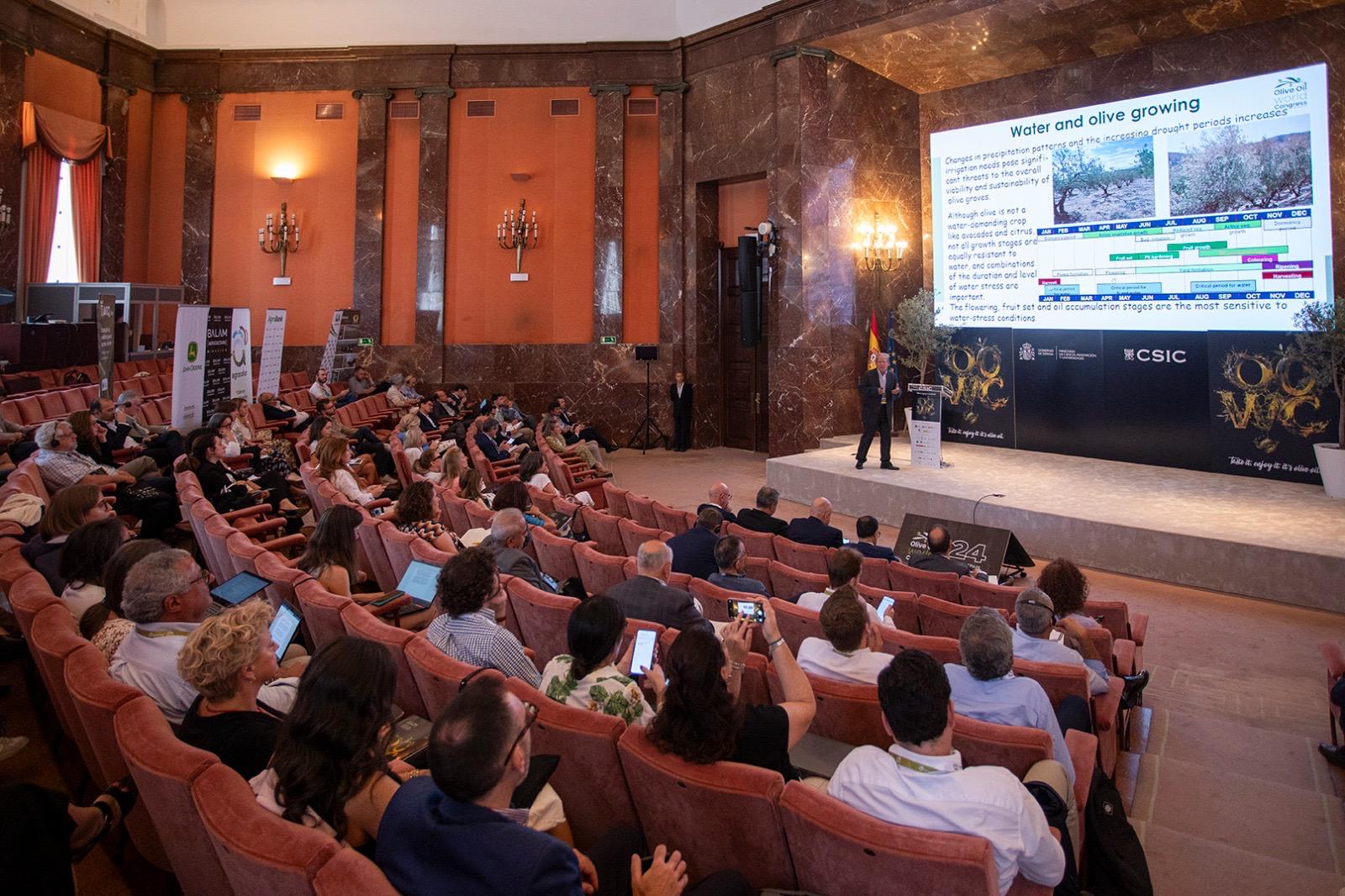
The Olive Oil World Congress (OOWC) 2026, which will take place in Lisbon on 2 and 3 July 2026, continues to unveil new top-level international speakers who will directly address the major challenges currently shaping the olive oil sector’s agenda.
From olive grove profitability and climate pressure to quality, consumption and positioning in international markets, the congress will offer a space for analysis and debate on the factors redefining the present and future of the global olive oil sector.
One of the key pillars of the programme will be the technological transformation of olive growing, with a presentation by Rosa Gallardo (University of Córdoba), who will analyse how digitalisation, artificial intelligence and the strategic use of data are no longer a promise but are becoming decisive tools. These technologies are consolidating their role as key elements in maintaining profitability, improving efficiency and optimising decision-making, especially in a context of rising costs and scarce resources.
The defence of olive oil quality and credibility in international markets, a highly topical and strategic issue for the sector, will be addressed by Wenceslao Moreda (CSIC) and Roberto Silva (LATU). Both experts will focus on standardisation, authenticity and the harmonisation of analytical methods as fundamental pillars for protecting product value and strengthening consumer confidence worldwide.
The congress will also incorporate new leading voices in sensory analysis, an increasingly decisive factor in differentiating olive oil in a highly competitive market. Plácido Pascual (Regional Government of Andalusia), Susana Mattar (University of Cuyo), Asma Ben Maimoun (Ministry of Morocco), Ana Carrilho, Efi Christopoulou (SEVITEL) and Tullia Gallina (University of Bologna) will take part, discussing the role of tasting, panel training and sensory perception as strategic tools for value creation and commercial positioning.
The adaptation of olive groves to climate change, one of the most urgent challenges for the Iberian sector, will be analysed by Carla Inês (INIAV–Elvas) and Antonio Manzaneda (IFAPA). They will address key issues such as efficient water management, soil management and the resilience of production systems in the face of increasingly extreme climate scenarios.
In the field of food innovation and sustainability, the programme will include Karolina Brkić (Institute of Agriculture and Tourism of Croatia), with a presentation focused on personalised nutrition and the role of olive oil in precision medicine, and Gonçalo Moreira (OLIVUM), who will analyse how the circular economy and digitalisation can become real drivers of competitiveness for the sector.
The block dedicated to consumption, gastronomy and markets will feature Juan Vilar (strategic consultant) and Rafael Tonón (Basque Culinary Center), together with experts in communication and positioning such as Francisco Luís Mondragão-Rodrigues (IPPortalegre) and Ayça Akça Uçkun (Olive Research Institute). This section will explore how to connect with today’s consumer and generate value in an increasingly competitive and globalised market.
With these new additions, Olive Oil World Congress 2026 presents a programme fully aligned with the current realities of the olive oil sector, consolidating Lisbon as a key forum for Iberian and international debate on innovation, quality, sustainability and markets.
Registration is now open, with an early-bird discount available until 31 March. Those interested in participating can complete their registration through the official congress website, choosing from the different participation formats tailored to professionals, researchers, companies and organisations in the olive oil sector.
For its organisation, the OOWC currently counts on the support of institutions such as the International Olive Council (IOC), CIHEAM, the Mediterranean Diet Foundation, and various public and private entities, including the Regional Government of Castilla-La Mancha, through its Campo y Alma brand; SOM Gastronomia of the Government of Catalonia; the Spanish Ministry of Agriculture, Fisheries and Food, through Foods of Spain; the Portuguese Ministry of Agriculture and Sea; and the Madrid Institute for Rural, Agricultural and Food Research and Development (IMIDRA), as institutional sponsors. In the private sector, the Congress is supported by AgroBank, GEA and Feria de Zaragoza, through ENOMAQ.
Anyone interested in participating can obtain further information through the OOWC Technical Secretariat by calling +34 917 217 929 or by emailing info@oliveoilwc.com.
 Sentido Común Internet
 Agrifood Comunicación

 Solo disponible accediendo desde Safari
