
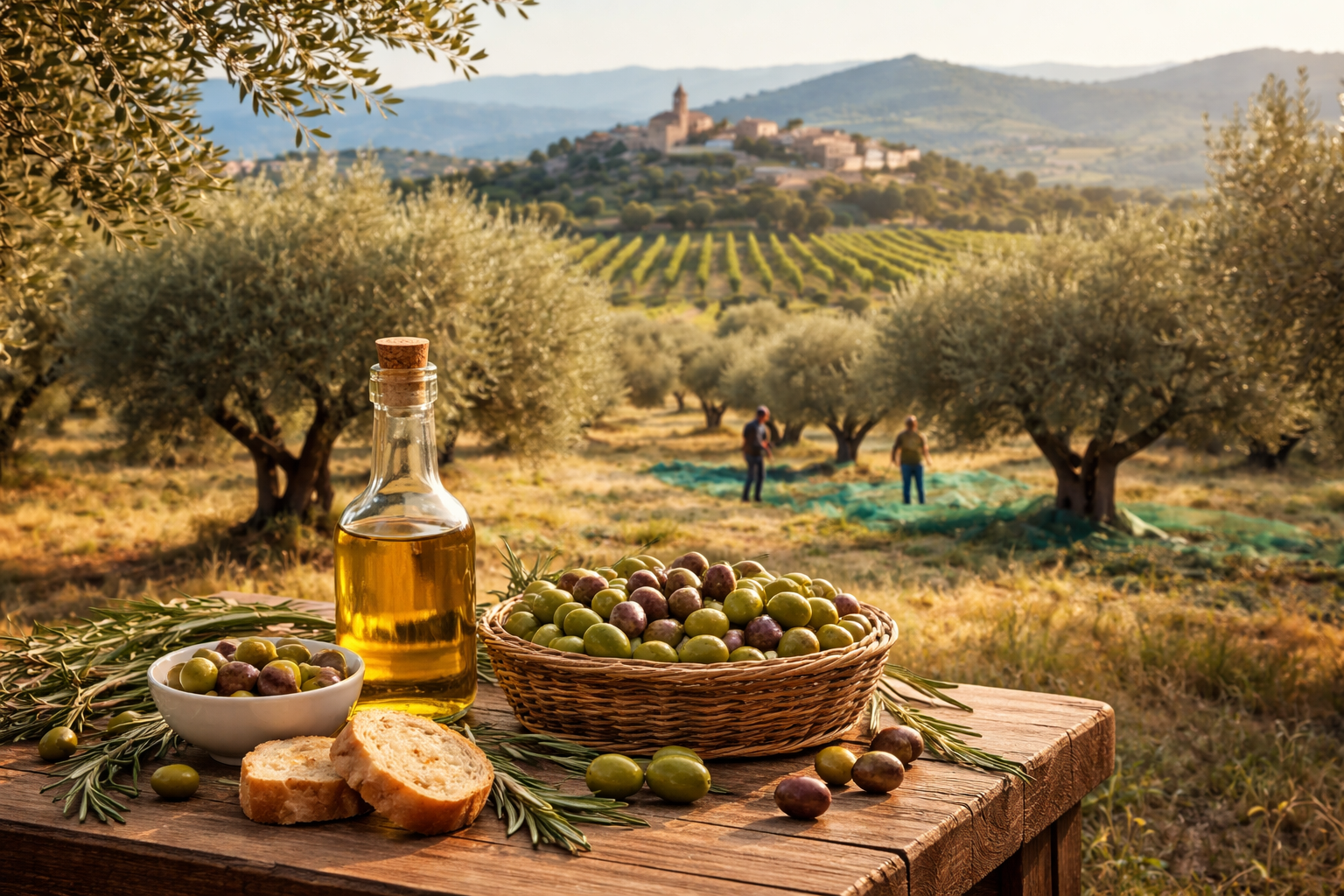
It is one of the oldest and most meaningful elements of Catalonia’s agricultural and culinary identity. Its presence goes far beyond the kitchen: it is embedded in the landscape, the rural way of life, and a Mediterranean tradition that has remained alive for centuries. Olive cultivation has shaped large areas of Catalan territory and has historically been a vital source of food, trade, and social cohesion.
Evidence of olive oil production and consumption in Catalonia dates back to Roman times, making olive groves one of the oldest permanent crops in the region. Many present-day groves are located on historic estates, with centuries-old trees that are still productive today. This sense of continuity makes Catalan olive oil a product deeply connected to time and to the collective memory of place.
One of the most interesting aspects of Catalan olive oil is its sensory profile. In general terms, it is characterized by balanced and aromatic oils with a marked smoothness, the result of the Mediterranean climate and olive varieties historically adapted to the territory. This style of oil has directly influenced Catalan cuisine, where olive oil is not meant to mask ingredients, but rather to accompany them and enhance their natural flavors.
Olive oil has also been a central element of Catalonia’s rural economy. Even today, tens of thousands of hectares are devoted to olive groves, especially in inland and dry-farming areas where other crops would be unviable. In this sense, the olive tree fulfills a dual role: productive and environmental, helping to sustain rural populations, preserve the landscape, and prevent soil erosion in vulnerable areas.
In recent years, Catalan olive oil has taken on a new cultural and symbolic dimension thanks to the international recognition of Catalan gastronomy. During the period in which Catalonia was designated a World Region of Gastronomy, olive oil was presented not only as an agricultural product, but as a key element of culinary identity and the Mediterranean lifestyle, closely linked to health, sustainability, and food quality.
Today, olive oil in Catalonia represents a synthesis of tradition and modernity. Cultivation methods passed down through generations coexist with new production techniques and a growing awareness of the product’s cultural value. Beyond production figures or awards, Catalan olive oil remains, above all, a direct expression of the land and of its way of understanding gastronomy.
 Sentido Común Internet
 Agrifood Comunicación

 Solo disponible accediendo desde Safari
