
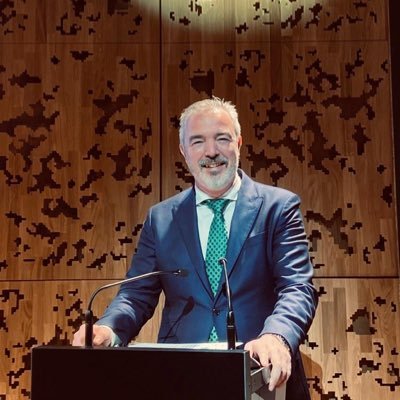
What does it mean for AgroBank to be part of this World Congress, which will place the olive grove sector at the center of international analysis and debate?
Olive oil is part of our deepest identity. We are not only talking about a product of excellence recognized around the world, but also about a way of understanding the land, supporting rural populations, preserving landscapes, and passing knowledge from one generation to the next. For AgroBank, participating in a World Congress like this means being where we should be: alongside a strategic sector for Spain and for thousands of families. It is also an opportunity to listen, share our vision, and help ensure that the olive sector continues to be an economic, social, and environmental driving force in the future.
The olive sector lives between inherited tradition and the constant need to reinvent itself through technological innovation. In your conversations with farmers and cooperatives, what concerns and also opportunities do you see in the field today?
The sector is going through an exciting yet highly demanding period. There is understandable concern about market volatility, the impact of climate change, and the increase in costs that farmers and cooperatives have faced in recent years. Water management, generational renewal, and farm profitability remain key issues. At the same time, however, we see an enormous capacity for adaptation. Spanish farmers are embracing technology, investing in more sustainable models, and recognizing that innovation is no longer an option but a necessity in order to remain competitive. In this regard, we see a sector with ambition and a promising future.
AgroBank has spent years supporting and working closely with Spain’s agri-food sector. In the specific case of olive oil, what needs beyond financial ones are you identifying among olive growers, cooperatives, and mills today, and how is the bank responding to these challenges?
Beyond financing, what olive growers, cooperatives, and mills often need most is support, proximity, and a long-term vision. They need partners who understand agricultural cycles and the unique characteristics of each region. At AgroBank, this is precisely the approach we take: offering tailored solutions, supporting investments in modernization, sustainability, and energy efficiency, while also providing knowledge, advisory services, and digital tools that help stakeholders make better decisions. Our commitment goes beyond financing campaigns or projects; it is about strengthening the entire olive oil value chain.
Looking at the World Olive Oil Congress program, there is an entire section dedicated to monitoring the digitalization of the value chain and the so-called “mill of the future,” focused on automation, energy efficiency, and circularity. For an institution like AgroBank, what does it mean to support the financing of technological innovations that make Spanish olive mills more efficient and competitive?
For AgroBank, supporting technological innovation in olive mills means directly investing in the sector’s future competitiveness. The concept of the “mill of the future” is not a distant vision it is already taking shape through more automated, energy-efficient, and sustainable processes. Spain is a global leader in olive oil production, but maintaining that leadership requires investment in digitalization, traceability, resource optimization, and the circular economy. From our perspective, facilitating this transformation is a shared responsibility. Every innovation that improves a mill’s efficiency also enhances its profitability, sustainability, and ability to compete in an increasingly demanding global market.
If you had to define in one sentence what olive oil represents today for our country and for the rest of the world, what would your choice be?
Olive oil represents the perfect union of tradition, health, sustainability, and Mediterranean excellence; a product that tells the world who we are and how we understand our land.
 Sentido Común Internet
 Agrifood Comunicación

 Only available by accessing from Safari
