
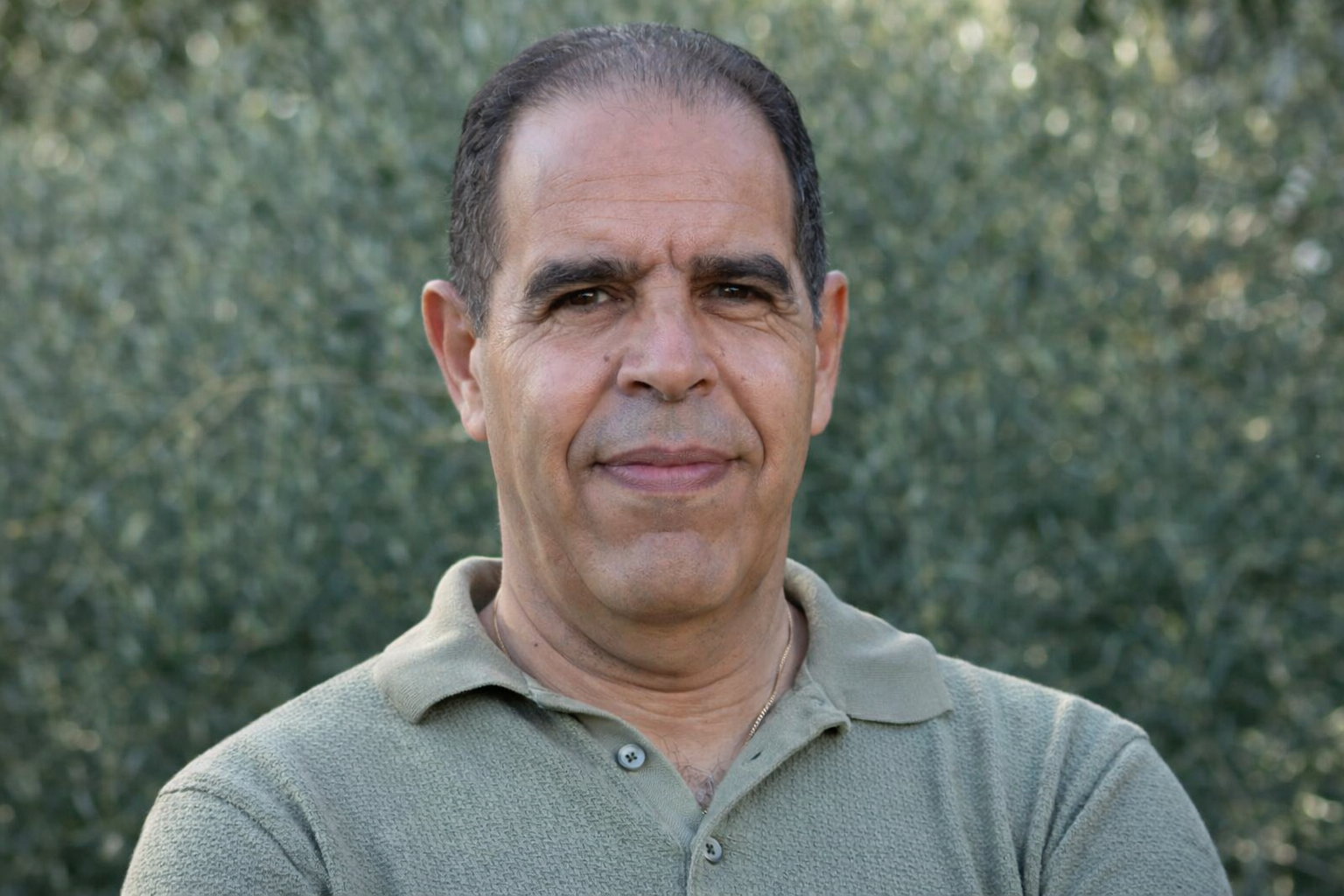
Ramzi Belkhodja. Head of Training at CIHEAM Zaragoza and President of the Scientific Committee of the OOWC
The organization of the OOWC is making progress in designing the program for the upcoming congress. What have been the main criteria when selecting the topics and speakers who will participate?
Within the OOWC Scientific Committee, we are working with very clear and demanding criteria. First of all, we seek topics that address the major current challenges facing the olive-growing and olive oil sector: sustainability, adaptation to climate change, productive efficiency, technological innovation, and the socioeconomic viability of olive-growing systems.
Secondly, we place great importance on the real transfer of knowledge. It is not only about scientific excellence, but about practical and applicable content that connects research with decision-making in the field, in industry, and in public policy.
As for the speakers, the main criterion is scientific and technical credibility, combined with practical experience and communication skills. We aim for a balance between internationally recognized researchers, industry professionals, and profiles that contribute a strategic and multidisciplinary perspective, while also ensuring geographical diversity and a variety of approaches.
Finally, the program is being designed in line with the identity of the OOWC: an open, rigorous congress focused on generating real and lasting impact in the olive sector.
Olive growing faces major challenges related to climate change, emerging pests, and sustainability. How are these challenges reflected in the presentations and sessions you have scheduled?
These challenges are not treated as isolated topics, but as cross-cutting themes throughout the entire scientific program. Climate change, for example, is addressed in sessions on olive grove adaptation, efficient water management, new agronomic management strategies, and the selection of more resilient varieties.
Regarding emerging pests and plant health, the program includes specific presentations on monitoring, prevention, and integrated control, with particular attention to science-based approaches, technological innovation, and international cooperation.
Finally, sustainability is approached from a comprehensive perspective: environmental, economic, and social sustainability. This includes topics ranging from input reduction and olive grove digitalization to product valorization, traceability, and the role of olive growing in rural territories. Overall, the program clearly reflects that the future of olive growing lies in combining scientific knowledge, innovation, and a long-term strategic vision.
One of the defining features of the Congress is its cross-cutting approach to the entire olive oil value chain. What kinds of synergies between production, processing, plant health, and the market are you seeking to strengthen through the program?
The Congress program is specifically designed to break down traditional silos between production, processing, plant health, and the market, and to promote an integrated vision of the olive oil value chain.
From production and plant health, the aim is to strengthen the link between agronomic decisions, olive grove health, and their direct impact on fruit and oil quality. At the same time, sessions dedicated to processing address how technological innovation and process control help preserve the value generated in the field.
Finally, the market and commercialization perspective closes the circle, highlighting how sustainability, traceability, quality, and differentiation respond to consumer expectations and enhance competitiveness. The ultimate goal is to foster real synergies across all links in the chain, promoting a more coherent, resilient, and future-oriented sector.
CIHEAM Zaragoza is a reference center for training and knowledge transfer in the Mediterranean. How does your experience and knowledge of the sector help you choose the most relevant topics?
CIHEAM Zaragoza’s experience in training and knowledge transfer in the Mediterranean provides us with a key advantage: very direct and well-tested insight into the real needs of the sector. Through our master’s programs, advanced courses, cooperation projects, and ongoing dialogue with administrations, researchers, and professionals, we are able to identify quite precisely where the main challenges and knowledge gaps currently lie.
This allows us to select topics that are not only scientifically relevant, but also useful and applicable in different Mediterranean production contexts. In addition, our international dimension makes it easier to incorporate comparative perspectives, best practices, and innovative approaches that enrich the program and make it especially attractive to a diverse audience. In short, CIHEAM Zaragoza’s experience acts as a bridge between science, territory, and the productive sector, guiding topic selection toward real impact.
Looking to the future, what message would you like to convey to professionals, researchers, and producers participating in the Congress regarding the role of scientific knowledge and international cooperation in the olive oil sector?
The main message is that the future of the olive oil sector will depend, more than ever, on the ability to turn scientific knowledge into concrete decisions and to strengthen international cooperation. The challenges we face—climatic, phytosanitary, economic, and social—do not recognize borders and cannot be addressed in isolation.
Science provides the tools, evidence, and innovation needed, but real impact is only achieved when there is collaboration between researchers, producers, industry, and public authorities, and when experiences are shared across Mediterranean regions with different realities but common challenges. Congresses like this should serve precisely to build that space for dialogue, trust, and cooperation that allows the olive oil sector to move forward in a sustainable, competitive, and resilient way.
 Sentido Común Internet
 Agrifood Comunicación

 Solo disponible accediendo desde Safari
