
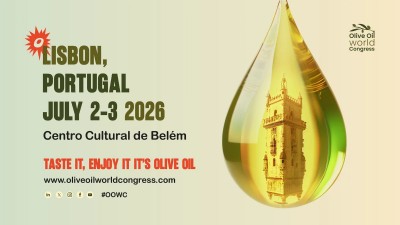
Two years ago, Madrid hosted the first edition of the Olive Oil World Congress (OOWC), the most important event in the olive sector and a meeting point for professionals worldwide. This time, the congress is moving to Portugal, as the neighboring country is emerging as a true benchmark for innovation and sustainability in olive oil. On 2 and 3 July, all stakeholders across the global olive oil value chain will share their knowledge and experience so that insights and actions can reach olive oil producers and consumers around the world.
What is the Olive Oil World Congress and why is it a key event for the olive oil sector?
The Olive Oil World Congress is the leading international knowledge platform for the olive and olive oil sector, bringing together producers, researchers, traders, and experts from producing and consuming countries. Its aim is to analyze the current situation, as well as existing challenges and opportunities, making use of today’s technology, innovations, and advances in order to prepare the sector for the future.
This event not only showcases the sector’s progress, but also helps chart the course for the future of olive growing, addressing key issues such as nutrition and health, new cultivation techniques, sustainability, digitalization, and the use of artificial intelligence tools available today to face the ongoing transformation affecting producers and marketers worldwide.
Lisbon will host the 2026 edition of the Olive Oil World Congress. In such a crucial event for the future of olive oil, why was Portugal chosen?
The choice of Lisbon sends a clear message: the future of olive growing will be defined in places that are forward-looking, and both producers and the national administration of Portugal proposed hosting the congress in the country.
Portugal has become a true benchmark for innovation and sustainability in the olive oil sector. This congress is not only about celebrating history, but also about shaping the sector’s path forward, and Lisbon with its modern outlook and ability to connect global stakeholders is the perfect place to do so. Here, the guidelines that will define the next challenges for olive growing will take shape, not only in Europe but worldwide. Discussions on the global market, sustainability, and innovation in olive oil production will be translated into concrete solutions, and it will be in Lisbon where the next steps are set.
“Portugal is a benchmark for innovation and sustainability in the olive oil sector”
Q.–Portugal has grown significantly in recent years as an olive oil producer. What can the country offer to make a difference in a congress expected to be key for the future of the global olive oil industry?
Portugal has earned its place among the world’s olive oil producers, not only for its production volumes but also for its ability to innovate, adapt, and lead the transition toward a more modern and sustainable model. The country, which understood early the importance of irrigation for crops, has chosen to reinvent olive oil production, focusing on high-quality output and an approach that combines cutting-edge technology with responsible environmental management. This congress in Lisbon is the ideal space to set the tone for what is coming next: a future where excellence is measured not only by quantity, but also by how well the sector adapts to new global markets and climate challenges.
 Sentido Común Internet
 Agrifood Comunicación

 Solo disponible accediendo desde Safari
