
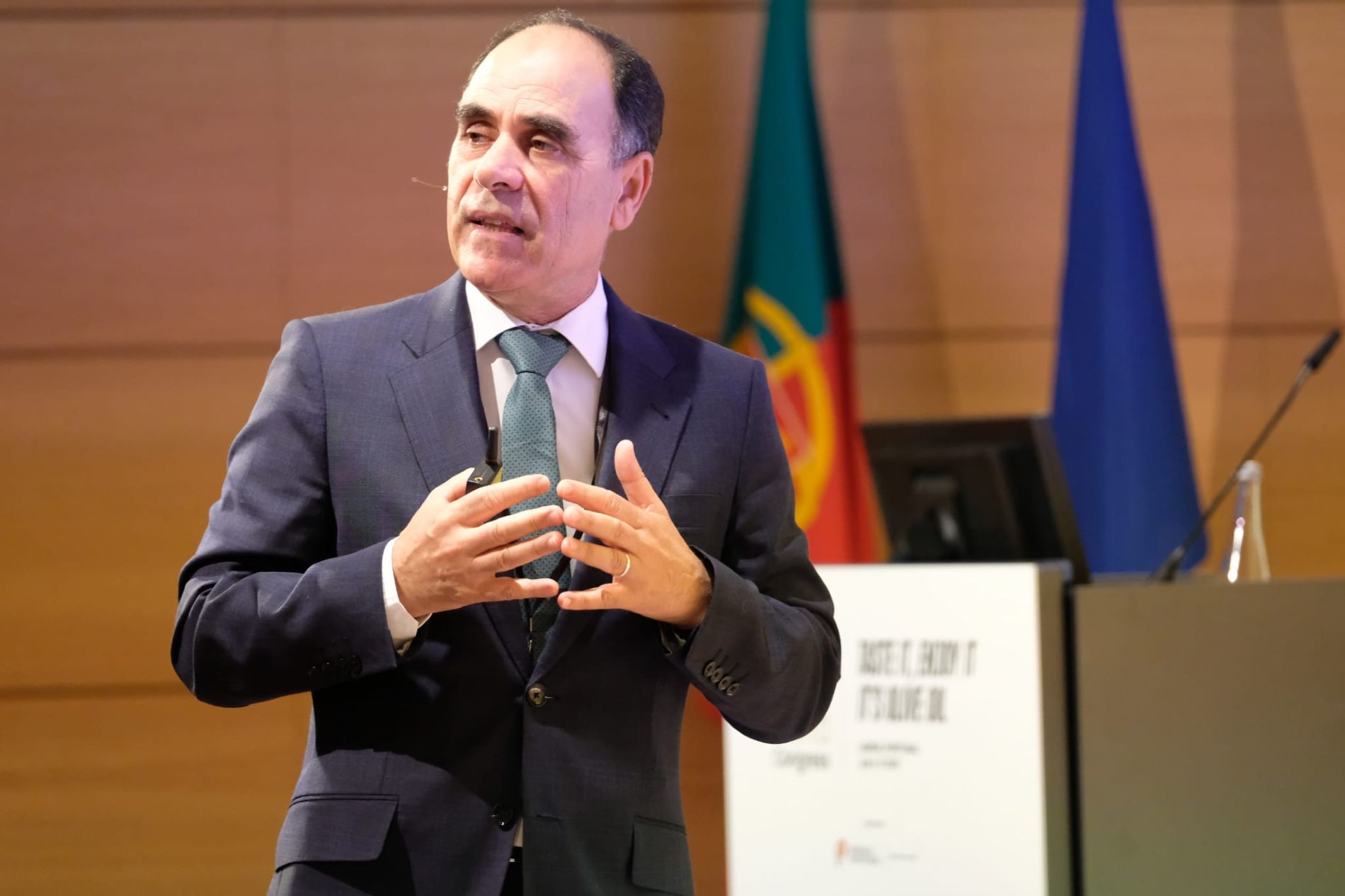
The second day of the Olive Oil World Congress (OOWC) focused on one of its most strategic sessions. On one side, discussions examined the geographical evolution of olive oil demand, which continues to expand into markets that barely existed two decades ago. On the other, experts analyzed the changing production structure of the world's leading supplier countries, where increasing cost pressures are driving consolidation into a smaller number of industrial operators capable of competing on scale and price. The Congress brought together two of the sector's leading international experts to examine this dual trend of expanding consumption and industrial concentration in olive oil production.
Abderraouf Laajimi, Deputy Executive Director of the International Olive Council (IOC), presented figures illustrating the sector's transformation. Since 1990, global olive oil consumption has almost doubled, reaching 3.2 million tonnes in the 2024/25 crop year. Over the same period, production has increased by more than 130%, while international trade has maintained sustained growth. Olive oil has evolved from being an essentially Mediterranean product into a global commodity with significant added value.
Europe still accounts for nearly 60% of global consumption, although its share continues to decline gradually. The United States is now the world's largest importer, purchasing between 380,000 and 400,000 tonnes annually—around 35% of total global imports. This leadership reflects a long-term strategy of positioning olive oil as the benchmark premium product within the healthy food segment.
Brazil ranks second, importing approximately 80,000 tonnes annually and representing 8% of global imports. Its defining characteristic—and greatest vulnerability—is that 99% of domestic consumption depends on imports, making the Brazilian market particularly sensitive to volatility in international supply and prices.
The third major emerging region is Asia-Pacific. China, Japan, South Korea and India together have accounted for 22% of global demand growth over the past two decades. Although per capita consumption remains relatively low, the region's large population and expanding middle class make it the greatest long-term growth opportunity for the global olive oil sector. Global demand is expected to grow by around 0.6% annually in volume, while market value is projected to increase at an even faster pace thanks to ongoing premiumization.
500 Olive Mills in the Iberian Peninsula Could Disappear Within Ten Years
While consumption expands beyond traditional markets, production continues to consolidate.
Juan Vilar, international strategic consultant, presented a study conducted together with the Oleícola Innova University Chair at the International University of Andalusia, concluding that more than 22% of the olive mills across the Iberian Peninsula—where Spain and Portugal together account for approximately 65% of global olive oil production—could disappear over the next decade.
The study forecasts the closure of around 200 mills within five years and as many as 500 within ten years.
Vilar describes this phenomenon as "economic natural selection." Of the 2,219 olive mills currently operating across the Iberian Peninsula, only 60—just 2.25% of the total—already process one-third of all olive production. These facilities have the capacity to process around 50 million kilograms of olives and can offer lower milling costs, attracting greater volumes and further reducing their unit costs.
The remaining mills are trapped in a cycle of declining throughput, unavoidable fixed costs and increasingly narrow margins, with milling fees ranging from €0.07 to €0.30 per kilogram depending on the facility.
If this trend continues, the study projects that just 85 olive mills will eventually account for 40% of the Peninsula's total olive oil production.
The last five consecutive low-yield harvests have accelerated this process. With fewer olives available and growing pressure to minimize milling costs, growers have increasingly chosen larger facilities, leaving medium-sized and smaller mills operating well below capacity. Ironically, although farm-gate prices have remained above average during this period, growers have not achieved significantly higher profitability because fixed costs remain largely unchanged regardless of harvest size.
For operators outside this group of large facilities, Vilar identifies four possible strategies: specializing in high-value olive oils, such as organic or early harvest extra virgin olive oils; joining second-tier cooperatives such as Jaencoop, Dcoop or Interóleo to reduce costs and improve profitability; converting into storage and logistics centers supplying larger milling facilities within a 15-kilometer radius; merging with neighboring competitors in municipalities where the density of olive mills—sometimes reaching as many as 15 facilities—makes the survival of all operators economically unviable.
More Consumers, Fewer Producers
The combined analysis presented by Laajimi and Vilar points toward a marketplace that is becoming increasingly global on the demand side—with the United States, Brazil and Asia emerging as key growth drivers—while becoming increasingly concentrated on the production side.
These two trends are closely interconnected. The expansion of new consumer markets requires suppliers capable of delivering consistent volumes, high quality and full traceability—requirements that only larger-scale operators are expected to meet competitively over the long term.
For emerging markets, the opportunities are structural but require premium positioning and a strong narrative centered on health benefits and product origin. For traditional producers, however, the message is urgent: transformation is already underway and will not wait. The choices are clear—specialize, integrate or disappear.
The Congress is institutionally supported by the International Olive Council (IOC), CIHEAM Zaragoza, and the Mediterranean Diet Foundation, together with public institutions including the Portuguese Ministry of Agriculture and Maritime Affairs, the Regional Government of Castilla-La Mancha ("Campo y Alma"), the Government of Catalonia, the Regional Government of Andalusia, and IMIDRA.
Private-sector supporters of this second edition include Olivum, AgroBank, BPI (CaixaBank Group), the Spanish Olive Oil Interprofessional Association, GEA Group, Novonesis–Univar Solutions, APOAC (Association for the Promotion of Olive Growing and Olive Oil of Aire and Candeeiros) through its Olivedos do Carso brand, Adsaica (Association for the Development of the Aire and Candeeiros Mountain Range), Feria de Zaragoza (ENOMAQ), Kubota, Dazeite, and Siliker.
 Sentido Común Internet
 Agrifood Comunicación

 Solo disponible accediendo desde Safari
